Blossoms of Power: The Fast-Moving Costume Revenge Drama Built on a Wary Alliance
A guide to the Tencent Video costume revenge drama Blossoms of Power: a reborn heroine and a frail-looking crown prince who ally out of mutual suspicion, and why viewers split over its breakneck pace and its heroine.
Why this one
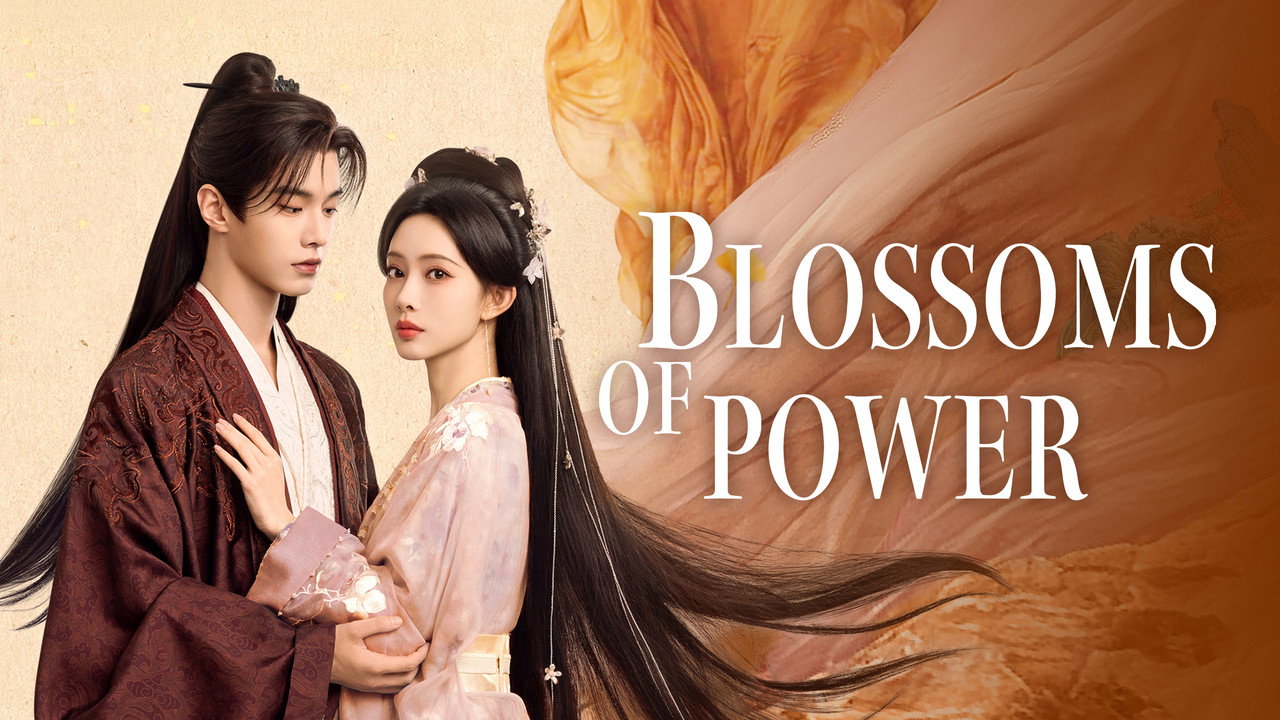
Revenge dramas about a reborn heroine are a crowded lane, and Blossoms of Power (百花杀, Bai Hua Sha) does not hide that it belongs to it. What it changes is the second lead. The crown prince, Xiao Huayong (萧华雍), played by He Yu (何与), is no rescuer. He looks frail but is, per the official synopsis, highly strategic, and he has spent years in a hostile palace. Meng Ziyi (孟子义) plays Shen Xihe (沈汐和), a woman who has come back from death knowing exactly whom she wants to destroy. According to the official synopsis, the two start out suspicious of each other and agree to an alliance because each can do something the other cannot.
That mutual wariness is the hook, and the show leans on it from the first episode. It also moves very fast, which drew praise from some viewers and complaints from others. The series premiered on July 9, 2026, on Tencent Video and has finished. Plot points here stay at the level of the opening episodes.
The setup
Gu Qingzhi (顾青栀) is the orphaned daughter of a prominent family in the capital. Her family is wiped out, and she dies with her grievance unresolved. She wakes in the body of Shen Xihe, a princess of the Northwest, keeping her memories and her old skill with incense and fragrance. Under the new name she returns to a court she knows well, where the crown prince is a figure everyone has written off: he was poisoned as a child and is thought to be too frail to matter. He is, in fact, patient and sharp, and he has been waiting.
Two details give the premise its texture. First, fragrance is the heroine's tool, not a decoration: she reads lies by scent and makes poison from incense, and viewers also note incense serving as an anaesthetic. Second, the court is crowded with princes, each with his own ambitions and each, in different ways, drawn to her. The story runs as quanmou (权谋, "power scheming"), a genre in which the plot is a chain of calculated moves among rivals, and the romance grows out of two people who keep outmanoeuvring each other.
Cast and crew
-
Meng Ziyi (孟子义) as Shen Xihe (沈汐和), who is Gu Qingzhi (顾青栀) in her earlier life
-
He Yu (何与) as Xiao Huayong (萧华雍), the crown prince
-
Xu Zhengxi (徐正溪) as Xiao Changqing (萧长卿), Prince Xin
-
Ye Zuxin (叶祖新) as Xiao Changmin (萧长旻), Prince Ning
-
Lai Weiming (赖伟明) as Xiao Changying (萧长赢), Prince Lie
-
Chen Heyi (陈鹤一) as Xiao Changyu (萧长瑜), Prince Yu
-
Kong Xueer (孔雪儿) as Li Yanhui (李雁回)
-
Fan Shuaiqi (范帅琦) as Bu Shulin (步疏林); Dong Zifan (董子凡) as Cui Jinbai (崔晋百); Lin Ziye (林子烨) as Tian Yuan (天圆)
Zhong Qing (钟青) directs, with Guo Feng (郭锋) as co-director, according to English and Chinese Wikipedia. The source is the web novel Wo Hua Kai Hou Bai Hua Sha (我花开后百花杀, "after my blossoms open, a hundred flowers die") by Jin Huang (锦凰). Tencent Video is a credited production company. Sources give the screenwriting credit differently. Zhou Shen (周深) is among the singers on the soundtrack.
From novel to screen
The series follows the novel's basic outline: a woman reborn into a new identity, a court full of princes, and a sickly crown prince who is more than he seems. The screen version ran for 36 episodes of about 45 minutes, according to English Wikipedia and TMDB, and a Sina Entertainment piece addresses the episode count directly, calling the figure of 40 that circulated online incorrect. Hong Kong's TVB broadcast a shorter cut of 27 episodes, which is another reason numbers vary between reports.
One adaptation choice drew comment. One r/CDrama viewer liked that the show does not put Gu Qingzhi's original face on screen, since the story can acknowledge that Shen Xihe looks different without hiring a second actress.
Fast, and hard to follow
The two most common descriptions of the show are opposite sides of one fact. A Sina Entertainment review column praised the opening as bu zhushui (不注水, "no padding"): the first episode sets up the heroine's earlier death, her rebirth and the prince's own investigation without slow shots or filler domestic scenes, and one viewer quoted there compared an episode's information load to several ordinary costume-romance episodes. The same column also gathered the other reaction, kan bu dong (看不懂, "can't follow"): characters are introduced and plot moves on before relationships settle, and the political logic of some scenes drew complaints.
English-language viewers say much the same. In the premiere masterpost one viewer wrote that "the scenes move fast and info-dump a lot", while another described a drama that gave "Too much plot point and not enough attention" in its later episodes. Others enjoyed the density. A viewer in the one-third-mark thread, for instance, said they relished watching competent protagonists outmanoeuvre their opponents.
The show gives little time to explain who each prince is, and viewers in the English threads shared a table of the princes by birth order and title for this reason.
Meng Ziyi as Shen Xihe
Shen Xihe is described in Chinese coverage as cold, decisive and quick to settle scores. She is the show's centre, and reactions to Meng Ziyi's performance are among the clearest dividing lines.
Some overseas viewers found the character hard to warm to. One said she was made "too cold, too smart and perfect", and others wrote that a heroine who always seems to know what everyone will do is difficult to connect with. A few used the term "Mary Sue" (a heroine who is too capable and too lightly challenged), and one viewer said she did not seem to have teething problems after waking in the new body. Others defended the choice, arguing that her air of being three steps ahead is part of the character and that the writing could be setting her up for a test. One viewer who disliked Meng Ziyi's early scenes and the dubbing said she suited the composed, stoic Shen Xihe far better.
The same threads turn to the other half of the alliance. He Yu plays a man who looks frail and thinks several moves ahead, and viewers who enjoyed the show often name the leads' scenes together as the draw, since neither is the weaker partner.
Where to watch
The series streamed on Tencent Video in China, with new episodes at 18:00 China time; Chinese Wikipedia reports that members received two episodes a day and non-members one, and lists the run to August 3. A Sina report puts the end of the main run at July 26. Overseas, English Wikipedia says Disney acquired international rights for select markets with English subtitles, and Chinese Wikipedia lists WeTV and Disney+ as the international platforms. Availability varies by country, so check Disney+ and WeTV in your region.
What overseas viewers are saying
The r/CDrama first-impressions masterpost, opened on the premiere day, drew more than 200 comments, and the episode-by-episode threads that followed regularly reached 100 to 200. These are viewers who chose to post, not a poll.
The first reactions were divided. Several viewers said within three or four episodes that they could not connect with the heroine; others said they liked the "classic rebirth revenge" feel and were waiting to see whether the leading man's acting matched his looks. A few preferred the second-lead storylines to the lead couple. By the one-third thread the tone had become warmer, with viewers praising the leads, the parade of princes and the humour. Complaints about the heroine's flawlessness continued alongside this.
Chinese-language coverage describes the same split. A Sina piece on the finale summarises the response as divided between viewers who liked the complete main storyline and cast, and those who felt the power-struggle plot ended too quickly.
Want to talk about this? Join the conversation on our Discord →
Get the newsletter
New drama guides, news and reviews in your inbox. No spam, unsubscribe any time.
Or subscribe by RSS: feed.xml