Overdo: A Republican-Era Romance Built on a Faked Death and a Second Name
A guide to the Tencent Video and iQIYI Republican-era romance Overdo: one actress playing a woman who returns under a new name, Zhang Linghe's place in the story, the two endings, and why viewers split.
Why this one
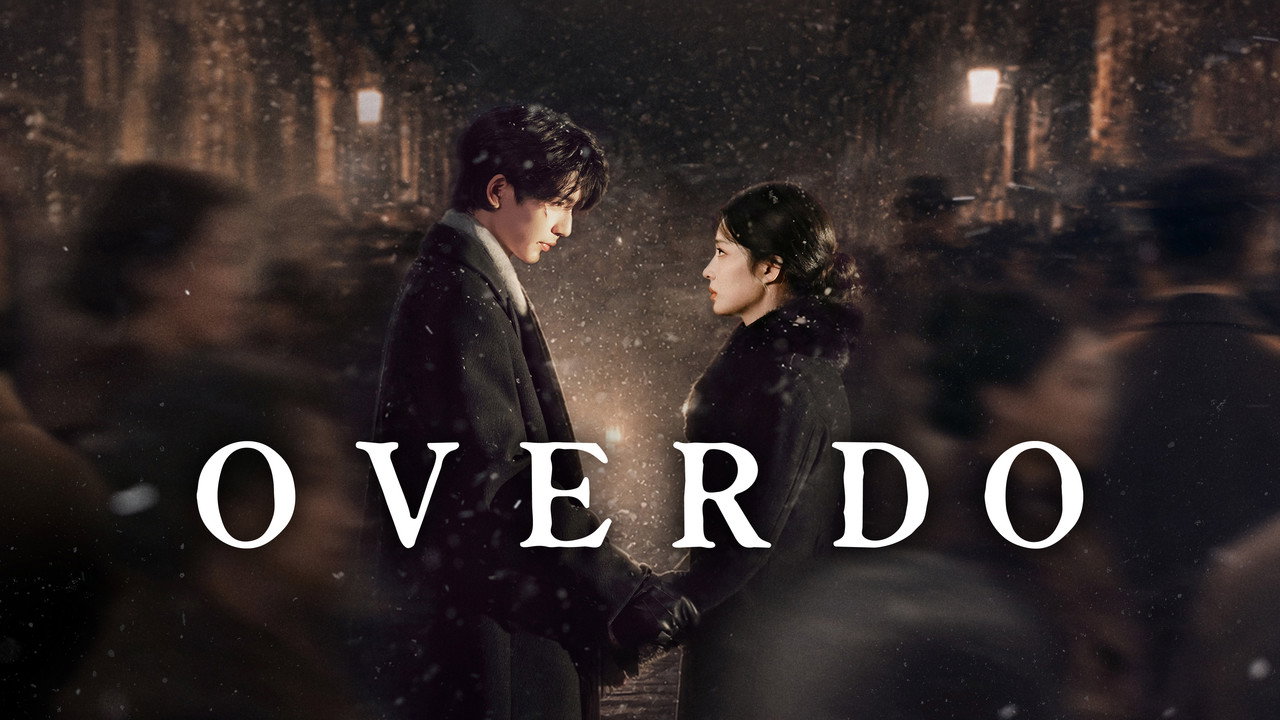
Overdo (这一秒过火, Zhe Yi Miao Guo Huo) is built on one actress and two names. Wang Churan (王楚然) plays Ren Susu (任素素), a woman who saves a runaway boy, loses her family because of it, fakes her own death, and returns three years later as Fang Mulan (方牧兰), the future sister-in-law of the man who thought she was gone. He is Murong Qingyi (慕容清峄), played by Zhang Linghe (张凌赫). That setup is the hook.
The series premiered on July 19, 2026, on Tencent Video (腾讯视频) and iQIYI (爱奇艺), and finished on August 5 after 33 episodes. It is also a title that divided audiences. Chinese entertainment media reported that Douban (豆瓣), China's main user-review site, opened it at 5.1 in late July, and its first-day opening sequence, generated with AI, was replaced after criticism. Some overseas viewers cite it as a low point for Republican-era romance, and others defend it.
The Chinese title plays on a phrase: guohuo (过火, "to go too far, to overdo it") attached to "this second" (zhe yi miao, 这一秒). TMDB and iQIYI's international service use Overdo; another database translates it as This Second Went Too Far. The source novel shares the first half of the title: Ru Guo Zhe Yi Miao, Wo Mei Yu Jian Ni (如果这一秒,我没遇见你, "If, This Second, I Had Not Met You").
The setup
The story is set in Republican-era Shanghai in the 1920s, according to TVDB. Murong Qingyi is the youngest son of a warlord, swapped at birth and raised through years of abuse by the man he took for his father. As a youth he runs away, and Ren Susu rescues him. The rescue brings disaster on her family. Years later the two meet again and fall in love, but she fakes her death to save someone else and leaves him heartbroken. Three years on, she comes back as Fang Mulan, his future sister-in-law, and old love, resentment and betrayal resurface. As war nears, the two have to act together.
The opening episodes carry that setup: the return, and his doubt that she is dead. Plot points here stay at the level of the opening episodes, apart from the ending note below.
Cast and crew
-
Zhang Linghe (张凌赫) as Murong Qingyi (慕容清峄)
-
Wang Churan (王楚然) as Ren Susu (任素素), also credited as Fang Mulan (方牧兰)
-
Fu Xinbo (付辛博) as Murong Qingyu (慕容清渝)
-
Xu Zhenxuan (徐振轩) as Li Boze (李柏则)
-
Wang Zisu (王籽苏) as Hai Tangqing (海棠青)
Yi Jun (易军) directs. TMDB credits the novelist Fei Wo Si Cun (匪我思存) for the source. Production-company credits are unconfirmed, and the writers' names are romanized differently across sources.
From the novel: a tormented-love adaptation
Overdo adapts a novel by Fei Wo Si Cun, whose romances Chinese coverage files under nuelian (虐恋, "tormented love"): love stories built on separation, sacrifice and pain. Chinese media described the series as a Republican-era story of that kind, set against warlord families and a looming national crisis.
That context explains the shape of the plot. A faked death, a return under another name and a heroine placed inside the hero's own family are the engine of the story, and the series puts them in its first stretch instead of building toward them.
One actress, two names
Cast databases (TMDB, TVDB) list Wang Churan as "Ren Susu / Fang Mulan". The synopsis says Ren Susu returns under a new identity, so this is one character with two names, not twin roles. The structure splits the story in two: the young couple before the faked death, and then the woman who walks back into his family's house under another name.
That gives the second half its tension, because the man she left behind is now tied to her through his family. It also puts the weight on Wang Churan, who carries both versions of the character. A Chasing Dramas review found that she and Zhang Linghe were not given enough material to work with, and put the blame on the script, not on the leads.
Zhang Linghe and the two endings
Zhang Linghe is top-billed as Murong Qingyi. The overseas comments about him vary. One viewer came to the show for him and left disappointed; another finished it mainly to watch him; a third called it the drama in which he showed his acting best. The Chasing Dramas review likewise places the weakness in the writing and also describes his character as petulant in one widely mocked airplane sequence.
His own remarks concern the ending. In a livestream reported by Chinese media in late July, Zhang said the crew had shot two finales: one where everyone is still there and one where no one is. The broadcast finale on August 5 was the tragic one. On the same day the production released a separate extra set in a parallel timeline, where the characters end up together.
A split reception, and the opening-credits episode
Douban's opening score of 5.1 was reported in late July, and a Chinese roundup of July dramas listed it at the bottom of its chart. Criticism in Chinese coverage centred on pacing and on a short-drama feel in the editing.
English-language reviews add specifics. Chasing Dramas, rating it 5.5 out of 10 after 12 episodes, names frantic cinematography, near-constant background music and inconsistent visual effects, and calls the setting more Republic-inspired fantasy than historical realism. It singles out the bonds among the women and the brothers as the strongest emotional element.
The opening sequence of the premiere was generated with AI, and viewers criticized it. On July 21 the production apologized on its official Weibo (微博) account and replaced it with a live-action version.
Where to watch
In China the series streams on Tencent Video and iQIYI. Overseas, iQIYI's international service lists it as Overdo, with the original Chinese audio and dubbed versions in Vietnamese, Thai, Indonesian, Spanish and Portuguese. Rakuten Viki began carrying it around July 20 with the first four episodes, and TMDB lists it as streaming there. Availability varies by region, so check iQIYI's international app and Viki in your country first.
What overseas viewers are saying
A review thread on r/CDrama in early September, titled with the phrase "short ai chinese drama", drew about 45 comments. Viewers pointed to close-ups, fast editing, near-constant music and what they read as vertical-drama techniques in the direction. One commenter said mixing those techniques into a standard drama format fails. Another asked "where did the budget go?" Several said they stopped partway, one at episode 14. On the AI opening, one viewer recalled that the outcry led the production to swap in a live-action version, and another said the use of AI in the first place was the problem.
Others pushed back. One viewer said the first eight episodes are weak and the show strengthens afterward, and called it the best drama for Zhang Linghe. Another described the look as "a deliberate imitation of 1930s film styles." A third said Republican-era dramas tend to be more soap-opera-like than other genres, and that this is why they like them.
The reactions fall along a familiar line, between viewers who accept melodrama as part of the Republican-era form and viewers who read the same choices as a lack of polish. These are viewers who chose to post, not a poll.
The Lament of Autumn, another Republican-era romance of the year, premiered on October 12 on Hunan TV and Mango TV.
Want to talk about this? Join the conversation on our Discord →
Get the newsletter
New drama guides, news and reviews in your inbox. No spam, unsubscribe any time.
Or subscribe by RSS: feed.xml