The Later Journey to the West: A Mythological Series With No Human Actors on Chinese Prime-Time TV
A guide to Mango TV and Hunan Satellite TV's AI-generated series The Later Journey to the West: what Chinese reports say about how it was made, how it reworks the Journey to the West story, and how viewers have reacted to the images and the pacing.
Why this one
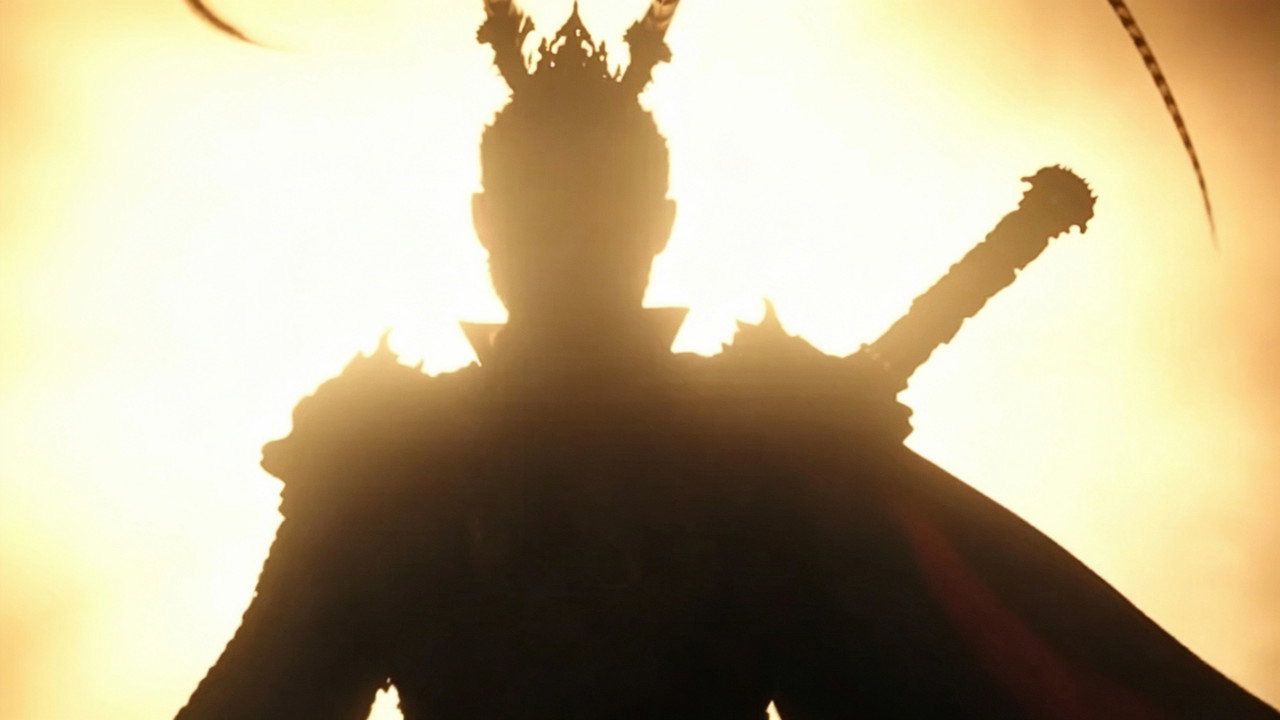
The Later Journey to the West (后西游记, Hou Xi You Ji) has no human actors. Its characters, sets and performances are generated by AI, and it still ran in the 8 p.m. prime-time slot of Hunan Satellite TV, a provincial broadcaster, alongside conventional dramas. Mango TV (芒果TV), the streaming arm of the same group, and Chinese media describe it as the first AI-generated long-form drama to air on satellite TV. The claim comes from the producers and the press that covered the launch, and it is a claim about format: AI short dramas already circulate widely on Chinese social media, and this series is longer, at about 40 minutes an episode, and subject to broadcast review.
It is also a Journey to the West story, one of the most adapted properties in Chinese television, so viewers can compare the generated images with decades of live-action and animated versions.
The first season is still in progress. Plot points here stay at the level of the opening episodes.
The setup
The series continues the story a thousand years after the pilgrimage of the original novel. Its lead is a new character, Sun Xiaosheng (孙小圣, "Little Sage Sun"), who awakens as the Monkey King of Flower-Fruit Mountain and sets out on a second journey west to recover the true scriptures. Chinese reports call this group the Xiyou erdai (西游二代, "second generation of the westward journey"). The first arc, Flower-Fruit Mountain (花果山篇), premiered on August 31, 2026, at 6 p.m. on Mango TV and the same evening on Hunan Satellite TV.
The source is a Ming-Qing novel of the same title, one of several sequels written after Wu Cheng'en's Journey to the West. Chinese reports describe the series as an original story that borrows the novel's premise and characters, not a page-by-page adaptation. Characters from the original, such as the pilgrims' companions, are announced for later arcs.
Cast and crew
There is no cast list in the usual sense. Mango TV states that characters and scenes are generated and that real locations and real people are not used. Chinese reports do not name voice performers.
-
Producer: Mango TV, through its AIGC Innovation Content Center (AIGC创新内容中心). Ren Xu (任旭) is described as its general manager.
-
Production company: Bojing Culture (伯璟文化), a company that reports describe as a documentary specialist.
-
Director: Li Dongshen (李东珅), whose earlier credits reported by China News Service are history documentaries such as The Hexi Corridor (河西走廊).
-
Credited to Hunan Broadcasting Group and Hunan Happy Sunshine Interactive Entertainment Media, with special support from the Hunan provincial radio and television bureau.
-
Production team: nearly 100 people, according to Hunan Satellite TV.
The English title is not official. English-language outlets use The Later Journey to the West, and others render it as Journey to the West: The Sequel. We found no English title on Mango TV's platform or on TMDB.
How it was made
The series was produced on Mango Lingchuang (芒果灵创, "Mango Spirit Creation"), Mango TV's in-house AI content platform. Mango TV's own account is that the platform gathers more than 40 image and video generation models plus lip-sync, editing and upscaling tools. A report carried by a Hunan news site names Seedance 2.0 and 2.5, video models from the Volcano Engine (火山引擎), the cloud arm of ByteDance, as taking part in the video generation. Other reports on the series name no specific models, so the full list of tools is not public.
As described in those reports, the workflow runs in stages. The script is imported, AI breaks it into a shot list, and the director picks the shots, which are then assigned to team members to generate. The platform adds a virtual camera with lens, depth-of-field and movement controls, a 3D lighting system, and a skeleton control meant to fix body proportions and prevent distorted poses. Members can sketch corrections onto a frame and edit a region without regenerating the whole shot. Every generation is logged by member and shot, with the reject rate tracked.
The producers say the team generated 109 characters and 143 scenes, and that these remain in an asset library for later use. Mango TV's AIGC center told Chinese media that a character first planned as minor became the main antagonist after the AI produced a group shot that made the character look more menacing, and the director kept it. It also said general models trained mostly on human faces matched mouths badly on animal characters, so the team trained a model for animal lip-sync.
One phrase appears across the coverage: bian shen bian bo (边审边播, "review while airing"). Mango TV and state media say this is the first series to use the arrangement under a broadcast-regulator policy package known as Guangdian 21 tiao (广电21条, "the broadcasting authority's 21 measures"), in which production, review and broadcast overlap. Later episodes can be adjusted in response to review and audience feedback. In the second arc, Chinese media report that the team made the five episodes in 20 days and redid three and a half of them after viewer feedback.
Wang Xinying (王心莹), deputy general manager of the AIGC center, told Chinese media that AI drama still struggles with continuity, mismatched styles and consistent performance across shots, and that no single model solves all of them.
Chinese reporting on rights and training data is thin. English analyst commentary notes that the public details on model provenance and performer consent are limited.
Mango TV's AIGC center and the same platform also produced a second, much shorter series in October, Liao Bu Qi A Peng You, whose AI-generated performers are presented as named "AI artists" with their own social media accounts.
Adapting the story
The design choices are the series' most documented creative decisions. China News Service reports that Li Dongshen describes the characters as a feifuyuanshi erchuang (非复原式二创, "reinterpretation, not restoration"). The goddess Chang'e's robes draw on the Tang-dynasty painting Zanhua shinü tu (《簪花仕女图》, "Ladies Wearing Flowers") and Tang tomb figurines. The Jade Rabbit takes its bearing from the Luoshen fu tu (《洛神赋图》, "Nymph of the Luo River" scroll), and the Four Heavenly Kings are based on murals at Fahai Temple. The Heavenly Palace is drawn as a human-shaped form with twenty-four layers rising like a spine.
How the pictures have been received
Chinese coverage of the premiere is mostly supportive. Fans quoted by China News Service praise the scale of the battle scenes, and the production's own account says it met its goals for viewing and membership. Critics are easier to find in the less promotional pieces. One report says viewers called the characters soulless. Another summary of audience feedback cites slow pacing and uneven clarity in some footage, which Mango TV's chief technology officer attributes to viewer comments and promises to address with more intense fights and finer detail later.
English-language analysis is similarly split. An analysis on the Remio technology site, written the day after the premiere, describes praise for the landscapes and mythology and criticism of stiff expressions, uneven movement and synthetic-looking characters. It argues that a scene can be a technical achievement without being emotionally convincing, and that the test is whether viewers stay once the novelty fades.
On numbers, every figure is a claim from the broadcaster or a data vendor, and they measure different things. Hunan Satellite TV said it ranked first among provincial channels in its time slot on real-time ratings. Yicai, citing the third-party data provider Huan Big Data, reported an average rating of 0.27 percent and a peak of 0.33 percent on the premiere night. Mango TV reported more than 470 million full-episode views on its platform by the end of the second arc. Shares in Mango Excellent Media (芒果超媒), the group's listed parent, hit the daily limit on two consecutive days after the premiere.
Release schedule and episode count
Chinese reports state the first season is planned for 30 episodes of about 40 minutes, in three arcs. The first two arcs have five episodes each. Flower-Fruit Mountain, episodes 1 to 5, began on August 31. The second arc, Zhan Tiangong pian (战天宫篇, "Battle at the Heavenly Palace"), covers episodes 6 to 10, began airing on October 4 and concluded on October 9, according to China News Service. The same report says further episodes are planned for the winter holiday. 30 is the producers' plan; TMDB lists a different episode count.
What overseas viewers are saying
Overseas commentary so far comes from business and technology outlets, mainly TechNode, Yicai, 36Kr and the South China Morning Post, and it focuses on the stock reaction and on what a prime-time AI series means for the industry. The viewer reaction quoted above is from Chinese platforms and trade commentary, not from the fan community.
Where to watch
In China the series streams on Mango TV and airs on Hunan Satellite TV. One report says the first episode of the season was free and later episodes required a premium membership. Mango TV runs an international service, but we could not confirm whether this series is on it or with what subtitles. Availability varies by region, so check Mango TV's international app first.
Want to talk about this? Join the conversation on our Discord →
Get the newsletter
New drama guides, news and reviews in your inbox. No spam, unsubscribe any time.
Or subscribe by RSS: feed.xml