The Later Journey to the West
后西游记
A Journey to the West sequel with no human actors: characters, sets and performances are AI-generated, and it aired on Hunan Satellite TV.
About the drama
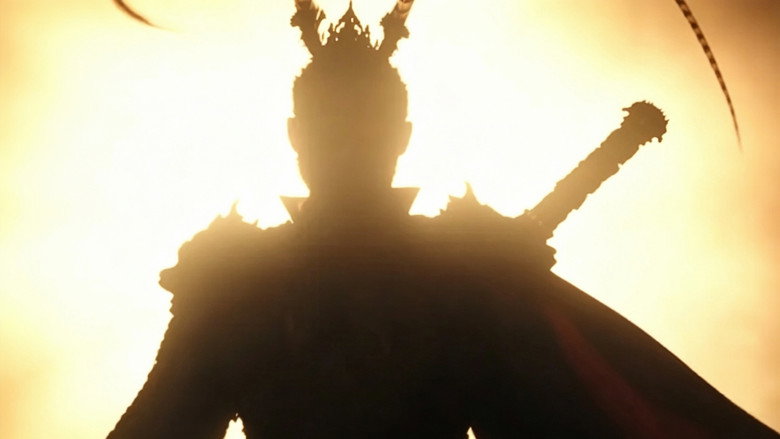
The Later Journey to the West (Hou Xi You Ji, 后西游记) has no human actors. Its characters, sets and performances are generated by AI, yet it aired on Hunan Satellite TV, a provincial broadcaster, alongside conventional dramas. Mango TV (芒果TV), the streaming arm of the same group, and Chinese media call it the first AI-generated long-form drama to air on satellite TV. That is a claim from the producers and the press, and it is about format: AI short dramas already circulate widely on Chinese social media, while this series runs about 40 minutes an episode and is subject to broadcast review.
It is also a Journey to the West story, one of the most adapted properties in Chinese television, so you can compare the generated images with decades of live-action and animated versions. Reception is split. Chinese coverage of the premiere is mostly supportive, with fans praising the scale of the battle scenes, while other viewers called the characters soulless and cited slow pacing and uneven clarity.
more
The series continues the tale a thousand years after the pilgrimage of the original novel. Its lead is a new character, Sun Xiaosheng (孙小圣, "Little Sage Sun"), who awakens as the Monkey King of Flower-Fruit Mountain and sets out on a second journey west to recover the true scriptures. The first arc, Flower-Fruit Mountain (花果山篇), premiered on August 31, 2026. Characters from the original, such as the pilgrims' companions, are announced for later arcs. The first season is still in progress.
The source is a Ming-Qing novel of the same title, one of several sequels written after Wu Cheng'en's Journey to the West. Chinese reports describe the series as an original story that borrows the novel's premise and characters, not a page-by-page adaptation. The English title is not official; some outlets render it Journey to the West: The Sequel.
It was made on Mango Lingchuang (芒果灵创, "Mango Spirit Creation"), Mango TV's in-house AI content platform, which the broadcaster says gathers more than 40 image and video generation models. The producers say the team generated 109 characters and 143 scenes. Director Li Dongshen (李东珅) describes the characters as a feifuyuanshi erchuang (非复原式二创, "reinterpretation, not restoration"). The goddess Chang'e's robes draw on the Tang-dynasty painting Zanhua shinü tu (《簪花仕女图》, "Ladies Wearing Flowers"), the Four Heavenly Kings are based on murals at Fahai Temple, and the Heavenly Palace is drawn as a human-shaped form with twenty-four layers rising like a spine.
One phrase recurs in the coverage: bian shen bian bo (边审边播, "review while airing"). Mango TV and state media say this is the first series to use the arrangement under a regulator policy package known as Guangdian 21 tiao (广电21条, "the broadcasting authority's 21 measures"), in which production, review and broadcast overlap, so later episodes can be adjusted in response to review and audience feedback.
Words to know
- Industry边审边播'review while airing': episodes are approved as the series is broadcastBian shen bian bo means 'review while airing'.
- Industry黄金档'golden slot': the prime-time block sold at the highest ad ratesHuangjindang means 'golden slot'.
- Industry上星'going up to the satellite': airing on a provincial satellite channelShangxing literally means 'going up to the satellite'.
Our coverage
The Later Journey to the West: A Mythological Series With No Human Actors on Chinese Prime-Time TV
A guide to Mango TV and Hunan Satellite TV's AI-generated series The Later Journey to the West: what Chinese reports say about how it was made, how it reworks the Journey to the West story, and how viewers have reacted to the images and the pacing.
Want to talk about this? Join the conversation on our Discord →