Song of Life: The Bilibili Original Where a Jobless Graduate Becomes a Funeral Makeup Artist
A guide to the 13-episode Bilibili original Song of Life: a jobless graduate who ends up as a funeral-home makeup artist, a trade Chinese television rarely shows, Zhou Yiran's lead performance, and why a well-rated show stayed little seen.
Why this one
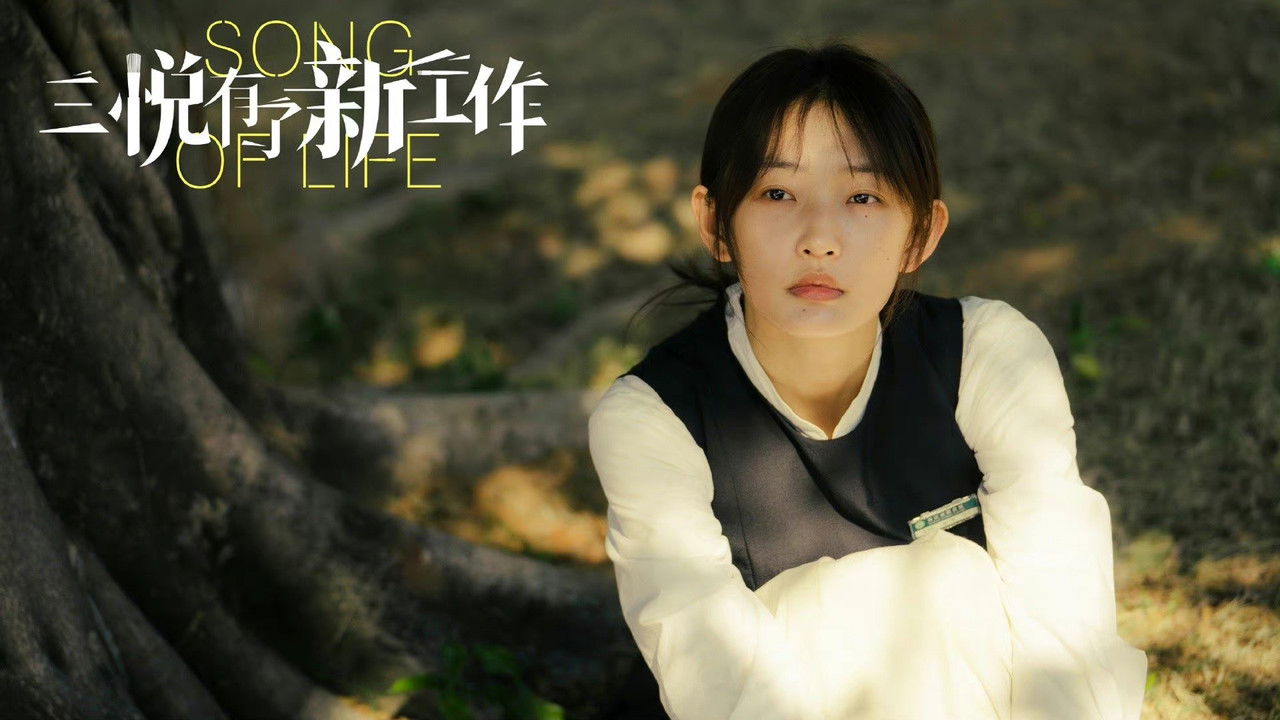
A drama about a funeral home usually sells itself as either a tearjerker or a joke. Song of Life (三悦有了新工作, San Yue You Le Xin Gong Zuo, literally "Sanyue Has a New Job") does neither on purpose. It is a 13-episode Bilibili original from 2022 in which a young woman with no plans ends up applying makeup to the dead, and each episode is built around one farewell.
The hook is how she gets there. Zhao Sanyue (赵三悦), played by Zhou Yiran (周依然), is a 1995-generation graduate who has stayed home without work for a year. After a quarrel with her mother she leaves, and an aunt finds her a place at a funeral home. She takes it by accident, and partly to spite her mother.
The show is also a small case study. It drew strong word of mouth and a modest audience, it came from a platform better known for youth and animation content, and it picked a trade that Chinese television rarely shows. Plot points here stay at the level of the opening episodes.
The setup
Sanyue is a recent graduate who has been lying flat, in the phrase tangping (躺平, "lying flat"), a term for opting out of the career race. Jiemian, a Chinese business and culture outlet, notes that the show engages with that theme, and Beijing News, in a 2022 interview piece, describes her as a 95-born restorative makeup artist who is indifferent to death at the start and slowly changes her attitude.
Her workplace is a binyiguan (殡仪馆, "funeral home"), where Chinese families arrange the preparation, farewell ceremony and cremation of the dead. The first episodes show the social side of the job. A review of the opening episodes on People's Daily's newspaper site describes a taxi that refuses to take her there, relatives who do not welcome her at a wedding, and a mother who suggests that "makeup artist" or "service industry" are the safest ways to describe her work.
Around her are a small group of colleagues and patients. Liu Jun (刘钧) plays Director Gao (高馆长), the funeral home's head, and Liang Jingkang (梁靖康) plays Luo Damiao (罗大淼), a young hospice doctor and her romantic interest. Yang Xinming (杨新鸣) plays her master Liu Qingming (刘清明). Their scenes widen the show from one woman's job to a view of how a hospital, a hospice and a funeral home hand a person along.
Cast and crew
-
Zhou Yiran (周依然) as Zhao Sanyue (赵三悦)
-
Yang Xinming (杨新鸣) as Liu Qingming (刘清明), her master
-
Liang Jingkang (梁靖康) as Luo Damiao (罗大淼), a hospice doctor
-
Liu Jun (刘钧) as Director Gao (高馆长), the head of the funeral home
-
E Jingwen (鄂靖文), billed among the leads, as Zhou Yanan
The director is Li Mo (李漠). The screenwriter is You Xiaoying (游晓颖). Bilibili produced the series with Dayin Guangshi (大隐光时) as co-producer. TMDB lists the series with 13 episodes, a premiere on September 21, 2022, and Bilibili as the network.
A trade the screen rarely shows
You Xiaoying's own account is the best way into the subject. She has said the idea grew from reflections on life and death in an aging society and during the pandemic, according to Sixth Tone. China Daily adds that she briefly worked in two funeral homes, in Sichuan and Hebei provinces, before writing. Jiemian reports that she did a two-week placement at a Chengdu funeral home in 2019, collecting material and observing daily routines. She describes the funeral home as a real endpoint of life that is nonetheless invisible in everyday talk.
That invisibility is why the project was hard to place. According to Jiemian, people in the industry first reacted with doubts about whether the story could sell, and the production side asked her to make the workplace scenes concrete. Bilibili was interested in the technical work, such as makeup on the deceased, and in real professional cases. Her own pitch was simple: a workplace drama with laughter and tears.
Sixth Tone's reporting on the profession gives context the show sits inside. Academic experts it cites estimate that China is short of about 20,000 funeral workers a year, and the outlet describes both the shortage and the stigma around the work as reasons younger, college-educated people have been entering it. Morticians interviewed by the outlet said they welcomed seeing the work portrayed realistically. The show is not a documentary, but it points at the same facts: a job that needs people, and an image problem that keeps some away.
Zhou Yiran as Sanyue
The series depends on its lead, and she is not written to be easy to like. In her Beijing News interview, Zhou Yiran said Sanyue has not yet reconciled with herself or with her family, that some early viewers found the character cold, and that she felt sympathy for her. The same piece quotes her on the romance with Luo Damiao: Sanyue wants a clear answer and does not accept vague arrangements.
Zhou Yiran is not new to Bilibili. Jiemian notes that she and Liang Jingkang played a secondary couple in the platform's earlier original Run For Young (风犬少年的天空, Feng Quan Shaonian de Tiankong), and she says in the interview that the pair are more grown-up here. That history helps explain why the two read as familiar with each other from the first scenes.
A longer review on NetEase argues that the show's best material is not Sanyue's own arc but the conversations around illness, death and goodbye, and that the weaker moments are reconciliations that arrive too quickly. It calls the show's questions light without being frivolous. That is where the series puts its weight: on the people she prepares for burial, and on the people who come to see them.
Well reviewed, little seen
The most useful numbers in the Chinese coverage are not about audience size. Douban, the Chinese review site, opened the show at 8.3 on October 9, and Bilibili's own rating opened at 9.6, as reported by Jiemian. Later figures vary by outlet.
Audience size is another story. Jiemian, citing Guduo data, put average views at roughly 10 million per episode, around 20th on the daily chart, and described the result as a win for reputation that did not break out of its niche. A second Jiemian piece makes the same point differently: the show was made on a smaller scale than Run For Young but was better reviewed, and it filled a gap among Chinese dramas in the subjects they cover. Sixth Tone reported 170 million total views on Bilibili as of October 31, 2022, after the finale on October 20.
The praise stayed mostly inside Chinese-language reviews.
Where to watch
Song of Life streamed on Bilibili from September 21 to October 20, 2022. It is finished, so there is no wait. Overseas availability varies by region and subtitle language, so check Bilibili's international service in your country. Song of Life is the English title used by TMDB and DramaWiki. Some listings give other titles, so search by the Chinese title as well.
What overseas viewers are saying
r/CDrama has no discussion thread for the show. English-language coverage is thin: Sixth Tone and China Daily wrote about it in the weeks after it aired, mostly as a story about the funeral trade, and TMDB and DramaWiki list it with cast and crew.
Want to talk about this? Join the conversation on our Discord →
Get the newsletter
New drama guides, news and reviews in your inbox. No spam, unsubscribe any time.
Or subscribe by RSS: feed.xml