Mystic Nine: The Republic-Era Changsha Prequel to The Lost Tomb
A guide to Youku's 2026 Republican-era tomb adventure Mystic Nine: the nine families of Changsha, William Chan's return as Zhang Qishan, where the series sits in the Daomu Biji timeline, and how viewers reacted to its mix of horror, comedy and ensemble drama.
Why this one
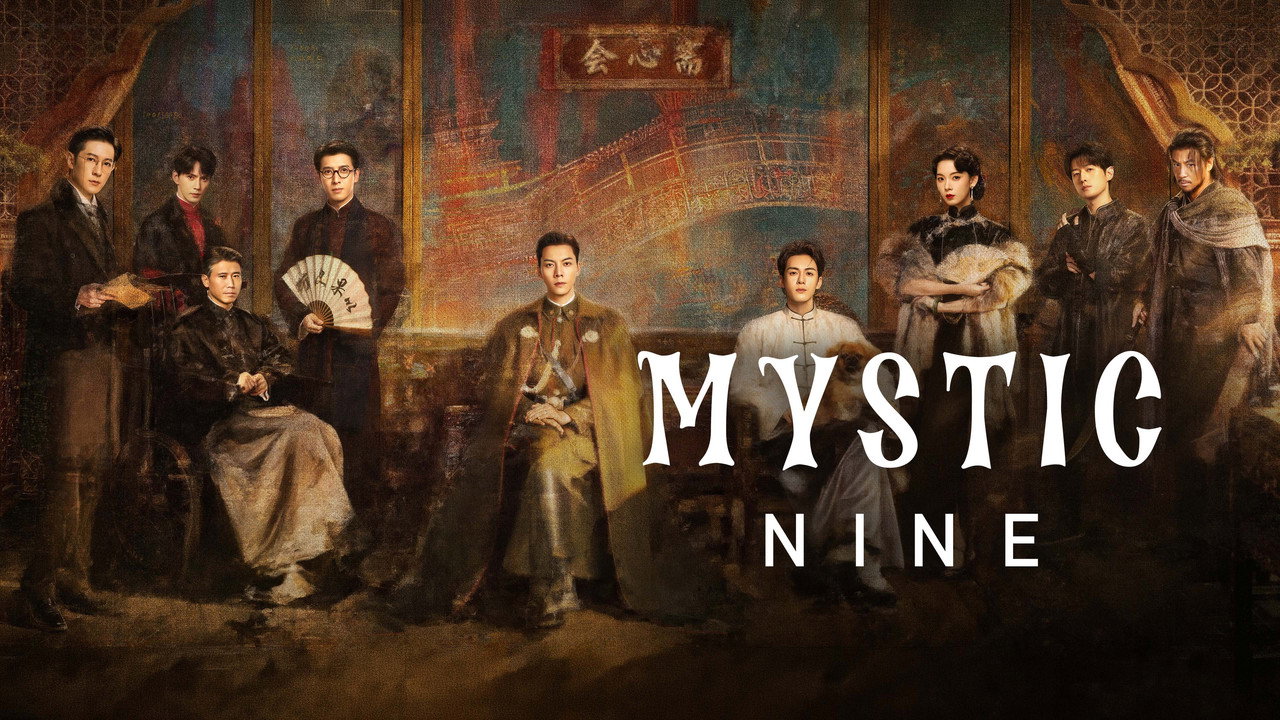
Mystic Nine (九门, Jiu Men) puts William Chan (陈伟霆) back in the role of Zhang Qishan (张启山), the Changsha garrison officer he played in the 2016 series The Mystic Nine (老九门, Lao Jiu Men). Chinese media describe the casting as a return after roughly a decade. The new series premiered on Youku at noon China time on July 30, 2026, and all 30 episodes are out.
It belongs to the Daomu Biji (盗墓笔记, "Grave Robbers' Chronicles") franchise of tomb-raiding stories by Nanpai Sanshu (南派三叔), but it is set decades before the series that gave the franchise its name. Overseas viewers asked early on whether they had to watch the older shows first. In the r/CDrama first-impressions thread, a commenter said many people had told them it works as a standalone.
The setup
Youku's synopsis, as quoted in the r/CDrama masterpost, runs like this. Zhang Qishan joins forces with Wu Laogou (吴老狗) and Huo Xiangu (霍仙姑), along with the other members of the Mystic Nine, when turmoil returns to Changsha. The disappearance of a military unit, Unit 401, uncovers a century-old secret, and the group faces choices between brotherhood, loyalty to their families and devotion to the country.
The story takes place in Republican-era Changsha in the 1930s, with the war against Japan in the background. The Sing Tao Headline plot primer says the first six episodes cover the unit's strange reappearance in a hospital and a labyrinthine tower, Geshi Lou (隔世楼, "Generation-Separating Tower"), where the characters see hallucinations and find a hidden stage of mummified remains.
The "nine gates" are nine families. A beginner's guide written by a viewer on r/CDrama describes them as families who control the underground antiquities trade of Changsha, in three tiers: officials and aristocrats at the top, tomb raiders in the middle and antique dealers below. Zhang Qishan is the first master and leader, and the guide places Wu Laogou fifth and Huo Xiangu seventh. It names Er Yuehong as the second master, an opera singer from a family of archaeologists, Qi Tiezui as the eighth, a fortune-teller, and Xie Jiu as the ninth, a Western-educated intellectual.
Relationships are part of the pitch. Chen Yao's Huo Xiangu is described by The Paper's pre-release report as the only woman among the heads of the nine houses. The same report says the series continues the relationship of Zhang Qishan and Yin Xinyue (尹新月) and adds a new romantic thread between Huo Xiangu and Wu Laogou.
The series runs about 45 minutes an episode, according to Chinese Wikipedia, and its episodes release at noon China time.
Cast and crew
-
William Chan (陈伟霆) as Zhang Qishan (张启山)
-
Zeng Shunxi (曾舜晰) as Wu Laogou (吴老狗)
-
Chen Yao (陈瑶) as Huo Xiangu (霍仙姑)
-
Xu Zhengxi (徐正溪) as Er Yuehong (二月红)
-
Ying Haoming (应昊茨) as Qi Tiezui (齐铁嘴)
-
Wang Yiting (王奕婷) as Yin Xinyue (尹新月)
-
Shi Xiaolong (释小龙) as Heibei Liu (黑背老六); Li Naiwen (李乃文) as Banjie Li (半截李)
-
Hu Yunhao (胡耘豪) as Chen Pi A-si (陈皮阿四); Ji Xiaobing (季肖冰) as Xie Jiu (解九)
Bai Shan (柏杉) directs. Nanpai Sanshu, the author of the source novels, is credited as chief supervisor (总监制) by Chinese Wikipedia and Baidu Baike. TMDB uses the title Mystic Nine, which Chinese Wikipedia also gives as the English title.
Where it sits in the Daomu Biji timeline
The 2026 series is the sequel to the 2016 The Mystic Nine, which English Wikipedia describes as a prequel to The Lost Tomb (盗墓笔记, Daomu Biji). The 2016 season ran 48 episodes on Dragon TV and iQIYI and begins in 1933. Wu Laogou is the grandfather of Wu Xie, the hero of the 2015 series, and Zeng Shunxi played Wu Xie in Ultimate Note (2020), according to Sing Tao Headline, which means the actor now plays his own earlier character's grandfather.
Sing Tao Headline also notes that the storyline overlaps with Archives: The Nanyang Mystery, a 2026 series that had just ended, through Zhang family characters in Southeast Asia and Changsha. One r/CDrama viewer who had finished that series first said it was their first time in this franchise. The Lost Tomb: The 2015 Web Drama Behind a Decade of Tomb-Raiding Sequels and Spin-Offs is our guide to the 2015 series that started everything.
A returning lead and a new line-up
Sing Tao Headline reports that Chan lost weight for the return and that the series gives him fight scenes. On r/CDrama, one viewer who loved the 2016 show asked how he looks the same, and another praised the cast as fitting their parts, writing that "everybody fits their roles so perfectly."
The newer faces split viewers more. Zeng Shunxi's Wu Laogou, the dog-loving fifth master, draws mixed reactions in the episode 1-10 thread: one viewer found him "continually arrogant and obnoxious," while another found the same behavior charming and loyal, and a third said the character changes later. Chen Yao's Huo Xiangu won over a viewer by episode 14. In the first-impressions thread, a viewer who had seen only the 2025 Time Raiders said they "liked every side character immediately."
Republican Changsha, horror and humor
The Paper's pre-release report places the story in Changsha in 1935 and describes a mix of time-reversal and family-feud mysteries, with the Nine Great Families trying to solve an ancient tomb prophecy while resisting a Japanese plot. The series mixes a haunted-tower mystery with ensemble comedy. In the masterpost, a viewer called the opening creepy and "well-paced and well-shot," and another said the first episode's scene transitions were bad and improved in episodes two and three. A viewer who knows the novels wrote that the drama is more comedic and focused on the mystical than the books. Another viewer compared the adventure to Indiana Jones, with Japanese soldiers in the Nazis' place.
Sing Tao Headline says the production used AR virtual production to rebuild old Changsha. One viewer liked that the 2016 series' Fo Ye (佛爷, "Buddha Master," Zhang Qishan's nickname) and Ba Ye (八爷, "Eighth Master," Qi Tiezui) dynamic was kept, and several commenters singled out the eighth master for his comic reactions.
Viewers also talk about pacing. In the episode 1-10 thread, one commenter joked that the characters had spent enough time among dried corpses and needed daylight, and a reply promised that the sunlight arrives soon.
Reception in China
Youku's in-app popularity index passed 10,000 within 50 hours of launch, reported Chaoxinwen, a Zhejiang news site, on August 1; the outlet called it the fastest to do so on the platform in 2026, without naming a data source. In October, the Yangtze Evening News cited a Yunhe Data Q3 report that gave the series 1.27 billion valid views and first place among that quarter's long dramas. These are tracker figures reported by Chinese outlets, not audited counts.
Where to watch
In China the series streams on Youku, with members getting two episodes a day and non-members one, according to Chinese Wikipedia. The same page lists Youku International and several Hong Kong and Taiwan services. In the r/CDrama masterpost, the airing platforms are Youku and Youku's YouTube channel, and viewers in the episode thread mention watching on Viki. One viewer in the finale thread said four bonus "Easter egg" episodes do not exist on Youku outside China. Availability varies by region, so check Youku's international app and Viki first.
What overseas viewers are saying
r/CDrama ran a masterpost on premiere day and episode discussions through the run. The early mood was enthusiastic about the characters and the production, with some caveats. One viewer who nearly dropped the show lost interest around episodes 5 and 6 and found the underground tower stretch slow, then returned when a plot turn in episode 11 changed the stakes. A commenter familiar with the novels said the sequel novel is short and that most of the plot is drama-only material.
After the finale, opinions on the ending split. One viewer liked its sad turn and its idea that time is the real opponent. Another disliked the reset-style twist but enjoyed seeing the nine work together. These are viewers who chose to post, not a poll.
Want to talk about this? Join the conversation on our Discord →
Get the newsletter
New drama guides, news and reviews in your inbox. No spam, unsubscribe any time.
Or subscribe by RSS: feed.xml