The Lost Tomb: The 2015 Web Drama Behind a Decade of Tomb-Raiding Sequels and Spin-Offs
A guide to the 2015 iQIYI web drama The Lost Tomb: its antique-dealer hero and his uncle's first tomb, the paid-membership release that overloaded iQIYI's servers, how the series fits the franchise that followed, and how overseas viewers approach it today.
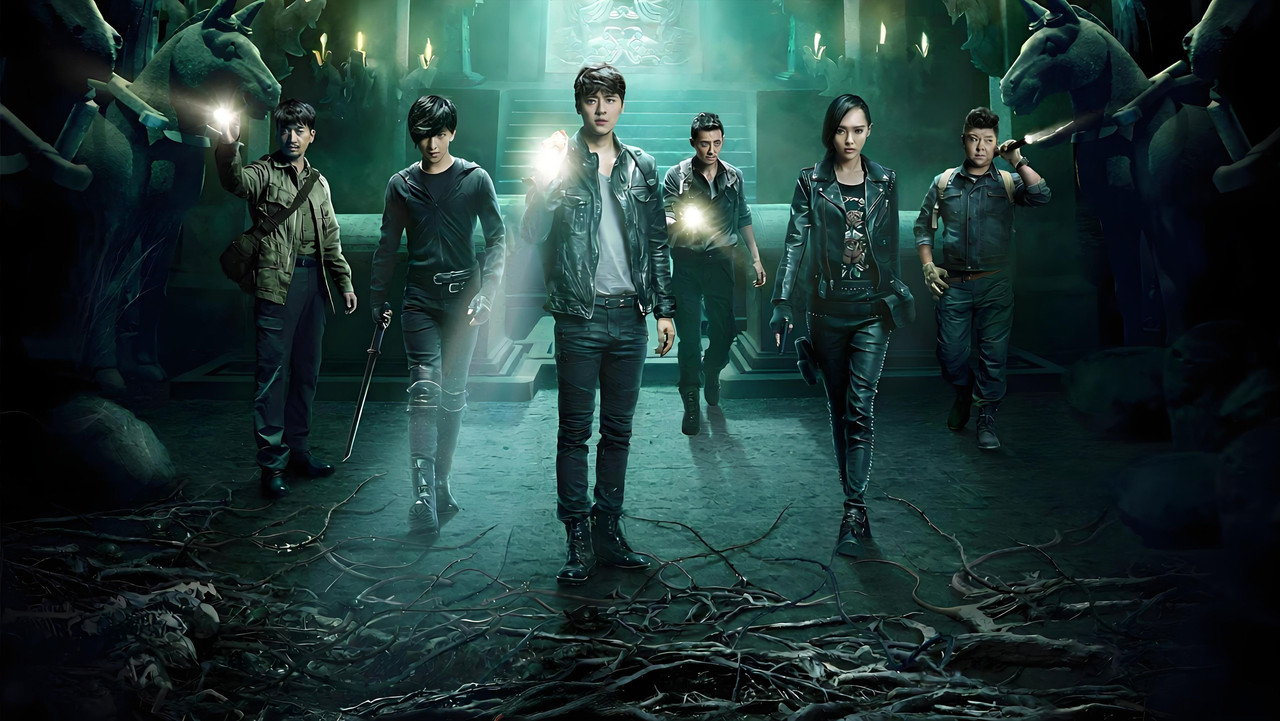
Why this one
The Lost Tomb (盗墓笔记, Daomu Biji) is where a long run of tomb-raiding dramas begins. It premiered on iQIYI on June 12, 2015, and adapted the first of the Daomu Biji novels by Nanpai Sanshu (南派三叔), the pen name of Xu Lei, a web novelist whose first book in the series is dated 2007. Everything that followed draws on the same world, from the prequel The Mystic Nine (老九门, Lao Jiu Men) in 2016 to a new Mystic Nine (九门, Jiu Men) in 2026.
The series is also a record of how Chinese streaming worked in 2015. iQIYI used it to test a paid-membership release, the platform's servers failed under the demand, and regulators ordered it offline for revision within eight months. Its tone sits closer to horror-adventure than to a heist: a young man, an uncle who knows more than he says, and a series of tombs that are not empty.
An iQIYI executive, Dai Yin, told the Global Times before the premiere that "The Internet era needs its own shows." The platform framed the series as made for streaming rather than for television.
The setup
Wu Xie (吴邪), played by Li Yifeng (李易峰), is the head of the Wu family. In this version his parents were archaeologists, and he was sent to study in Germany before returning to China. A Chinese newspaper preview from June 2015 noted that the web series keeps the novel's eerie look rather than softening it.
The two-part pilot opens with Wu Xie and a friend pursued by a mysterious group after an artifact comes into their hands. A mysterious young man drives the pursuers off. Back home, Wu Xie finds a silk manuscript, boshu (帛书, "silk manuscript"), and a message from his uncle, Wu Sanxing (吴三省), asking to meet. From there the story follows the uncle's team to the tomb of the Lu Shang King (鲁殇王墓) and the puzzle of the Seven-Star Lu Palace (七星鲁王宫), with the manuscript as the thread between them. The season has 12 episodes: the two-part pilot followed by ten, with weekly updates on Friday evenings according to Chinese Wikipedia.
Zhang Qiling (张起灵), played by Yang Yang (杨洋), is the mysterious companion of the uncle's team. A Hangzhou newspaper reported that Yang Yang trained two hours a day for the action scenes, and that the character stays as mysterious as in the novel.
Cast and crew
-
Li Yifeng (李易峰) as Wu Xie (吴邪)
-
Yang Yang (杨洋) as Zhang Qiling (张起灵)
-
Tang Yan (唐嫣) as A'ning (阿宁)
-
Liu Tianzuo (刘天佐) as Wang Pangzi (王胖子), "Fatty Wang"
-
Ken Chang (张智尧) as Wu Sanxing (吴三省), Wu Xie's uncle
-
Wei Wei (魏巍) as Pan Zi (潘子)
-
Ying Er (颖儿) as Huo Xiuxiu (霍秀秀); Sun Yaoqi (孙耀琦) as Chen Chengcheng (陈丞橙)
Bai Yicong (白一骢) wrote the series. Hong Kong filmmakers Law Wing-cheong (罗永昌) and Cheang Pou-soi (郑保瑞) lead the credited crew, in roles that English and Chinese Wikipedia list differently. It was produced by H&R Century Pictures (欢瑞世纪) and Enlight Media (光线传媒) for iQIYI.
In September 2022, Beijing police announced that Li Yifeng had been administratively detained for soliciting prostitutes.
A paid-membership release, and a crash
Interest was high before the first episode. In its June 9, 2015 announcement, iQIYI said related posts on Weibo, the Chinese microblog, had drawn nearly 3 billion reads and about 5.98 million discussions as of June 8, and that each trailer or promotional clip had passed one million views. The same announcement said the series would open with two episodes in its first week and then release weekly. On July 3, all episodes would open to paying members, while non-members would keep getting one a week. The platform called this the first member-differentiated release schedule for a web drama in China, and noted that Netflix had already released full seasons to members with House of Cards.
Yicai, a Chinese business outlet, reports that the pilot passed 100 million views in under 22 hours, and that iQIYI's servers went down on the night the full series opened to members. Yicai also puts the series at 2.754 billion views for 2015 and calls it the year's most-watched web drama. Chinese reports give figures from roughly 2.7 to 2.9 billion.
Tomb raiding under review
The series had its own run-in with regulators. According to the news site Jiemian, six web dramas, The Lost Tomb among them, were ordered offline for revision by China's broadcast regulator, the State Administration of Radio, Film and Television (广电总局), on January 20, 2016. Jiemian lists "bloody violence, vulgarity and feudal superstition" as the grounds given for some of the six, and does not name a specific reason for this series. Chinese Wikipedia records iQIYI putting it back online on February 2, 2016, and notes that viewers said some content had been cut.
The rules that apply to the genre are about superstition. The Television Drama Content Production Rules (电视剧内容制作通则) prohibit promoting spirit possession, reincarnation and witchcraft, according to Jiemian, which also notes that online platforms had faced lighter review than broadcast television. Adaptations of the novels have continued to be made since.
Two leads and a mixed reception
The series starred Li Yifeng and Yang Yang and drew the viewing figures above. The critical response was less warm. English Wikipedia summarizes it this way: critics called the storyline drawn out and the effects poor, and fans of the novel said the plot and characters strayed too far from the source. Chinese outlets quote Douban scores that differ widely.
From one novel to a franchise
The screen rights came first. According to Yicai, Nanpai Sanshu licensed them in 2013 to H&R Century Pictures, the producer, for 5 million yuan, covering nine novels over six years, and he confirmed in June 2019 that the license had expired. In between, a 2016 film, Time Raiders, is reported by Yicai to have grossed 1.004 billion yuan.
After 2015, the novels kept producing screen work. English Wikipedia lists the prequel The Mystic Nine in 2016, Tomb of the Sea in 2018, The Lost Tomb 2 in 2019, Reunion: The Sound of the Providence and Ultimate Note in 2020, and Time Raiders in 2025, among others. The same page says eight seasons of The Lost Tomb were originally planned and three had been produced as of 2020.
The 2026 Mystic Nine is the sequel to the 2016 prequel and goes back to Changsha in the Republican period, when Wu Xie's grandfather was a young man. Mystic Nine: The Republic-Era Changsha Prequel to The Lost Tomb is our guide to it.
Where to watch
In China the series streams on iQIYI. Its iQIYI page lists 12 episodes and carries a notice that some episodes are temporarily unavailable for copyright reasons. English Wikipedia lists Viki as a network, and also records broadcasts in Thailand from 2018 and on India's Dishoom+ from February to March 2025. Catalogs change by region and over time. Availability varies, so check iQIYI's international service and Viki in your country first.
What overseas viewers are saying
The 2015 series gets little new discussion on r/CDrama, and the 2026 threads that mention it mostly point newcomers elsewhere. In an August 2026 watch-order thread, one commenter calls the 2025 Time Raiders a good entry to the franchise "because it starts from the beginning", and another's personal order starts with it before the older seasons. A third says the 2026 Mystic Nine can be watched without the main series. These are viewers who chose to post, not a poll.
An English-language drama blogger who recommends the first season on Viki describes the franchise as creepy and notes that the physics often make no sense, suggesting viewers enjoy the absurdity.
Want to talk about this? Join the conversation on our Discord →
Get the newsletter
New drama guides, news and reviews in your inbox. No spam, unsubscribe any time.
Or subscribe by RSS: feed.xml