The Legend of Zang Hai: A Revenge Drama Built Like a Puzzle
A guide to Xiao Zhan's 2025 court revenge drama from the director of Empresses in the Palace: its slow-burn plot, the fan puzzle-solving and the criticism it drew, its hand-built invented world, and an ending viewers still argue over.
Why this one
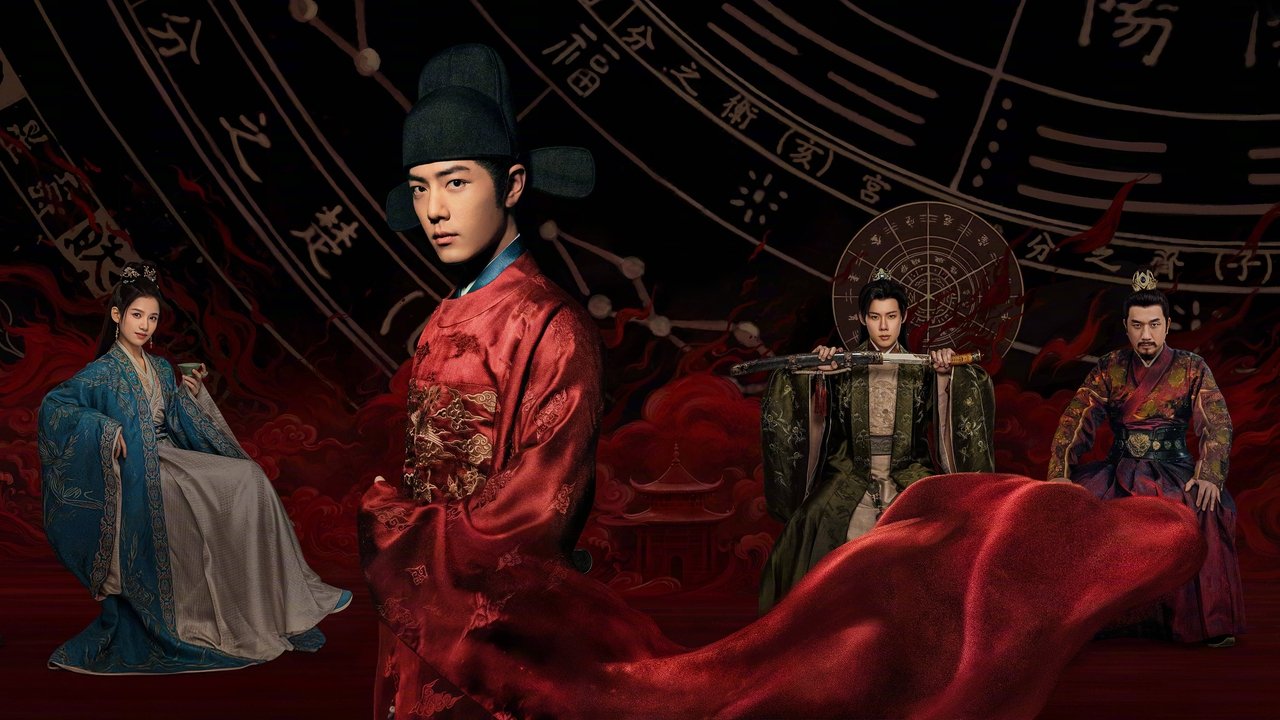
The Legend of Zang Hai (藏海传) is the drama in which Xiao Zhan (肖战), known abroad as the lead of The Untamed (陈情令), plays a man who spends ten years learning how to destroy the people who killed his family, and then has to decide what to do once he is close enough to do it. It premiered on 18 May 2025 on Youku (优酷) and CCTV-8 (央视八套) and runs 40 episodes of about 45 minutes. At its peak it held a 40.1% share of drama viewing on the chart of the data firm Yunhe (云合). On Douban (豆瓣), China's main user-review site, it stands at 7.1.
Behind the camera is Zheng Xiaolong (郑晓龙), chief director of Empresses in the Palace (甄嬛传, 2011) and The Legend of Mi Yue (芈月传, 2015). Where Empresses follows a woman rising through the palace ranks, this is a man working his way into the machinery of a court from below. There is no martial-arts fantasy, and the romance is a subplot: it is a political thriller in costume, built on disguise, patience and information.
The name tells you the method. Zang Hai (藏海) means roughly "hidden in the sea", and critics have traced it to a line by the Song poet Su Shi (苏轼) about one body hiding among ten thousand.
It was one of the most argued-over dramas of 2025. Many critics praised it as a revenge story that refuses easy satisfaction; others picked at its luck, its coincidences and villains who stop thinking when the plot needs them to; fans turned it into a group puzzle.
The setup
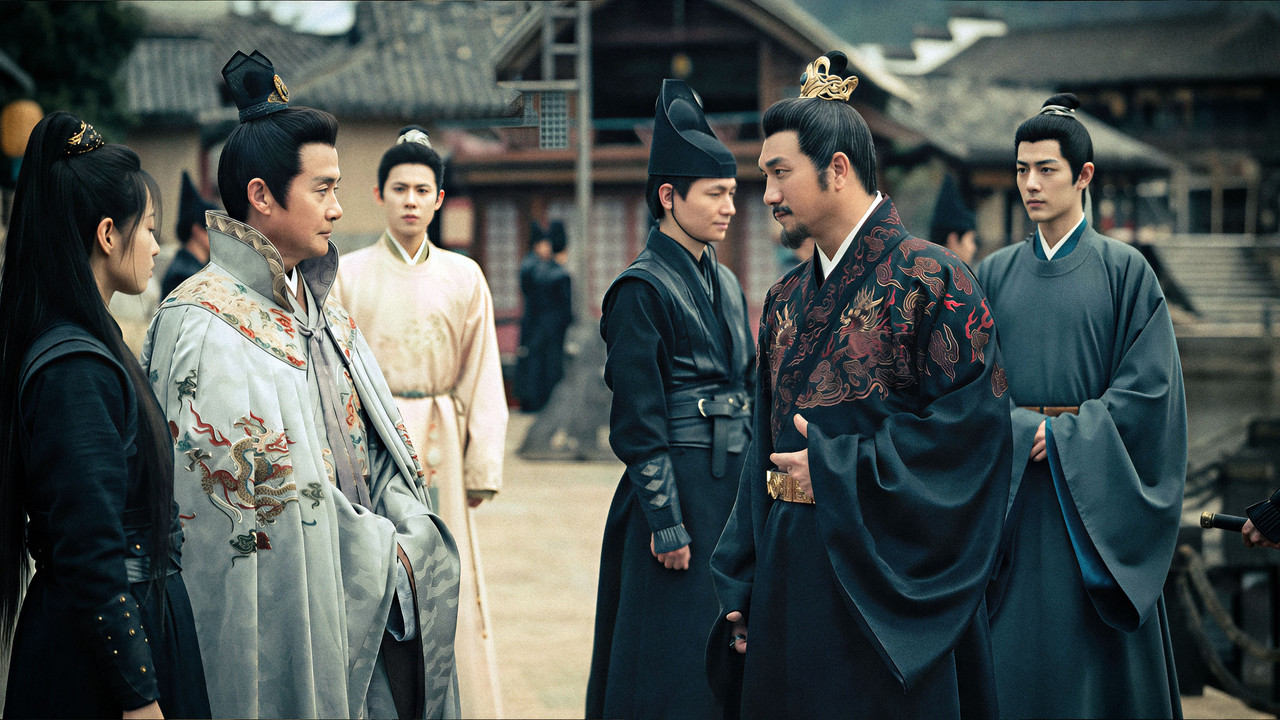
The empire is Da Yong (大雍), invented, though the makers imagined it in the Ming dynasty (1368–1644). The emperor is absorbed in carpentry and has stopped holding court. Real power sits with three men: the Marquis of Pingjin (平津侯), the realm's leading general; the chief of the palace eunuchs; and a senior minister. All three are chasing the Gui Seal (癸玺, gui xi), a legendary emblem of hidden power. A small border state, Dongxia (冬夏), has just been beaten and has submitted.
Kuai Duo (蒯铎) heads the Qintian Jian (钦天监, "Bureau of Astronomy"), the office that watched the sky, kept the calendar and read omens, a post with real political weight in imperial China. After he uncovers something tied to the Seal, the Marquis has his household killed, fourteen people in all. Only the youngest son, Zhinu (稚奴), gets away, carried out by a masked stranger.
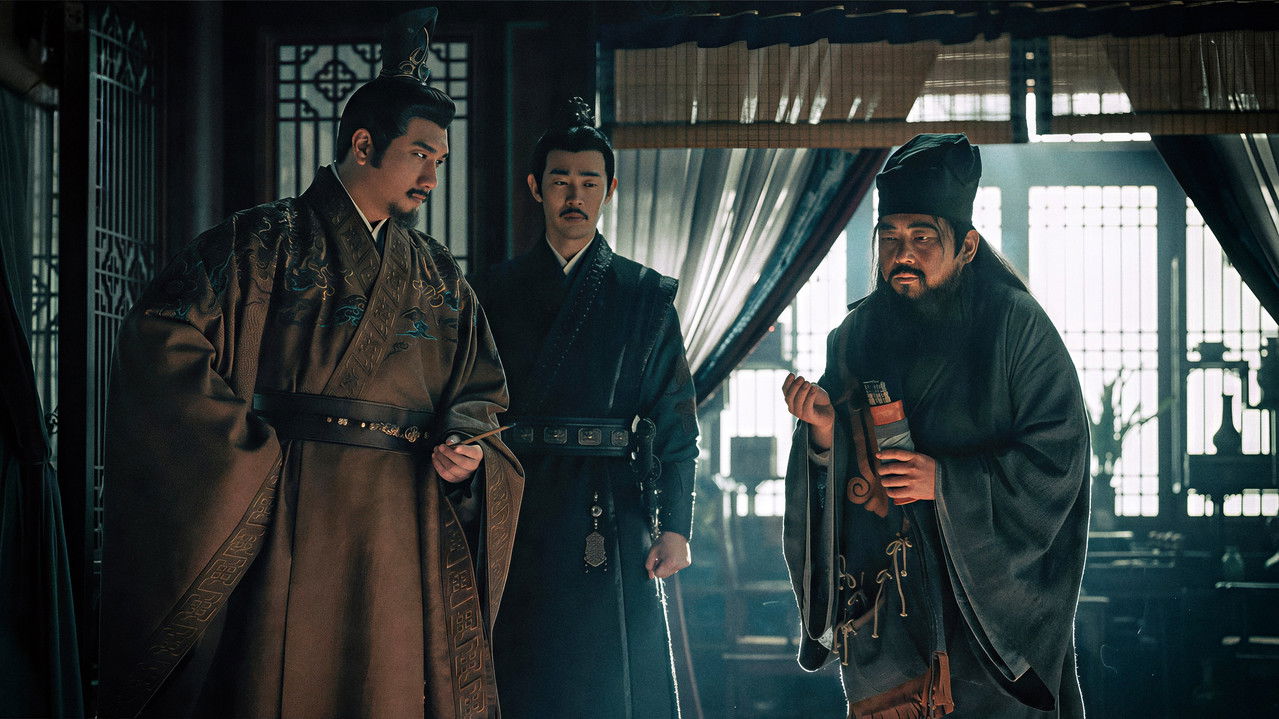
The boy spends ten years with three masters. Xingdou (星斗) teaches building and kanyu (堪舆, feng shui as the show treats it: geography and architecture rather than superstition). Gao Ming (高明) teaches zongheng (纵横), the old art of persuasion and division. Liu Chu (六初) teaches him to govern desire: how to work, how to behave, how to feel.
He returns to the capital with a changed face and a new name, hired as a feng shui master to settle a quarrel over burying a dowager beside the late emperor. Soon he is inside the household of the man who destroyed his family.
If you know Nirvana in Fire (琅琊榜), the shape is familiar: a wronged family, a hidden identity, a long game inside the court. The difference is position. Mei Changsu arrives as a seasoned strategist at the centre of power. Zang Hai arrives as a pawn with a narrow view of the board, and he makes mistakes.
Who's who
-
Xiao Zhan (肖战) as Zang Hai, born Kuai Zhinu (蒯稚奴)
-
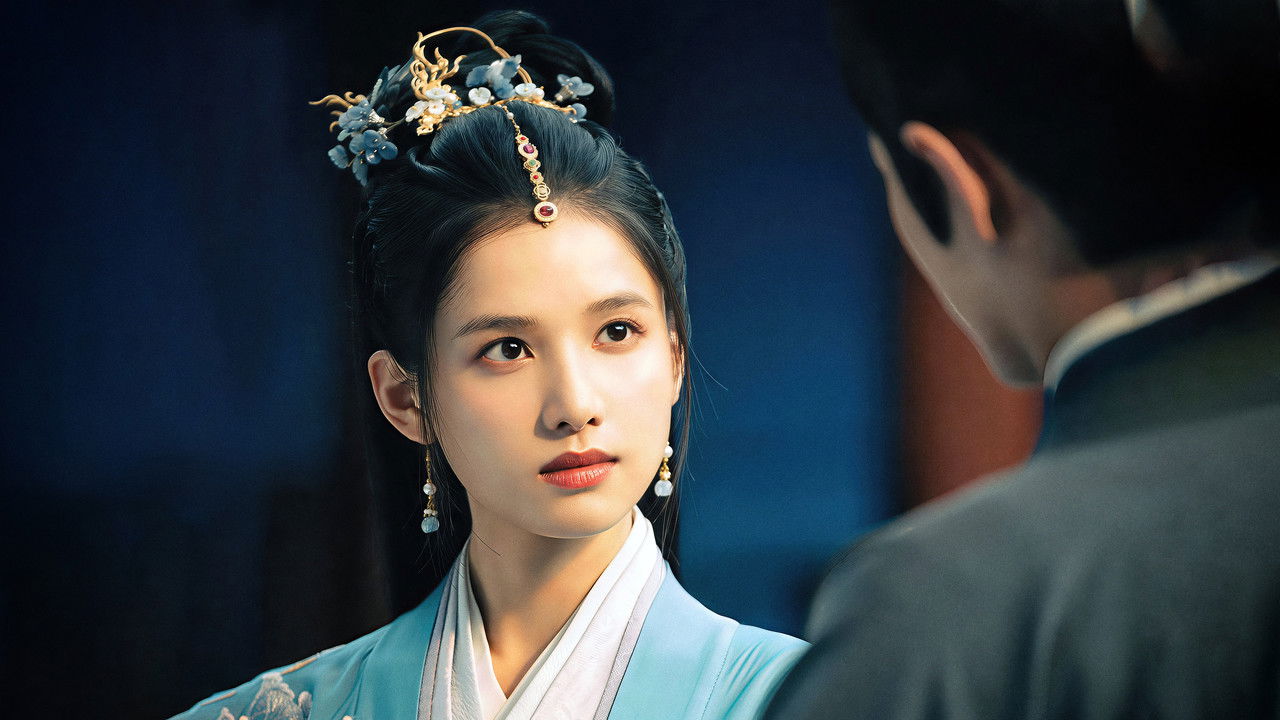
Zhang Jingyi (张婧仪) as Xiang Antu (香暗荼), a princess of defeated Dongxia who runs Zhen Lou (枕楼), a capital venue known for its shadow-puppet shows
-
Huang Jue (黄觉) as the Marquis of Pingjin, Zhuang Luyin (庄芦隐)
-
Zhou Qi (周奇) as his second son, Zhuang Zhixing (庄之行)
-
Xing Minshan (邢岷山) as Cao Jingxian (曹静贤), chief of the palace eunuchs, known as Eunuch Cao, Cao gonggong (曹公公)
-
Tian Xiaojie (田小洁) as Zhao Bingwen (赵秉文), a senior cabinet minister
-
Zhang Duo (张铎), Liang Chao (梁超) and Bai Bing (白冰) as the masters Xingdou, Gao Ming and Liu Chu
-
Wallace Chung (钟汉良) and Michelle Chen (陈妍希) as Zang Hai's parents, Kuai Duo and Zhao Shangxian (赵上弦)
-
Yu Nan (余男) as Mingyu Suti (明玉肃提), queen of Dongxia
-
Zhang Guoqiang (张国强) as the emperor, and Qiao Zhenyu (乔振宇) as his brother, Prince Yongrong (永容王爷)
Zheng is credited as chief director (zong daoyan, 总导演) and Cao Yiwen (曹译文), a younger director who studied under him for years, as director. Zhao Liuyi (赵柳逸) wrote the screenplay. The producers are Youku, Quantum Entertainment (量子泛娱) and Chunyu Film and Television (春羽影视). Filming began on 30 December 2023 at Hengdian (横店), the studio town in Zhejiang. The hero's name and some props come from the Daomu Biji (盗墓笔记, "Grave Robbers' Chronicles") universe of the novelist Nanpai Sanshu (南派三叔); more on that near the end.
 Save
Where to watch
In China the series streams on Youku and aired on CCTV-8; TVB Jade (翡翠台) showed it in Hong Kong from 4 August 2025. Disney+, Viu and Viki have been listed as international platforms. Availability and subtitle options vary by region, so check what is offered where you are.
Revenge that does not end in a bloodbath
Chinese commentary on the show keeps returning to shuang (爽), the pleasure of a payoff: the hero levels up, the enemy is humiliated on cue. The Legend of Zang Hai was widely praised for withholding it.
It starts with structure. Zang Hai does not appear until the second episode; the opening is spent on the family that will be destroyed, so the audience understands why this revenge has to happen at all. When he does arrive he has no cheat codes, no money and no network. He starts as a bullied junior adviser, kneels when he must and can barely fight. One reviewer found in him the weariness of an office worker.
Cao Yiwen contrasts the usual revenge arc, a parabola whose climax is its end, with Zang Hai's, which "spirals upward". The turn is from avenger to protector. In the capital Zang Hai sees ordinary people crushed by those above them and comes to understand that his enemy is more than one household; it is the system that lets such men act. Revenge also costs him: he feels guilt at using Zhuang Zhixing, and Xiang Antu offers him a warmth that has nothing to do with hatred.
Not everyone was persuaded. Some critics found his motive stays personal: unlike Mei Changsu, he never fuses a private grievance with a public cause, and the deaths of ordinary people serve mainly as backdrop. One called it a shallow shuang core inside a well-made scheming shell. Whether the drama breaks the revenge genre or repaints it is the first of its arguments.
Clues, coincidences and the critics
Cao built the series so the audience sees only what Zang Hai sees: no omniscient shots, no teasing close-ups. Clues and gaps are planted in every episode, and the loops close only in the last four. He knew viewers who spotted holes might quit; his answer was: "every clue pays off in the end."
The result was a fan craft. Viewers slowed frames down, searched old texts and compared theories on Weibo, Douban, Bilibili and Xiaohongshu (RedNote), and were nicknamed ye sheng bian ju (野生编剧, "wild screenwriters"). Fan videos and posts ran to about 100,000 a day while the series aired, and a joke went round: "CCTV airs two episodes; netizens write eight." Zheng's method is to treat details as plot: "When your details are very solid, people use them to fill plot gaps." It is how fans of Empresses in the Palace have kept dissecting that show for more than a decade.
The criticism is just as real, and some of it ran in official outlets. Beijing Youth Daily (北京青年报) put it bluntly: "Most of his revenge in the capital is chance and coincidence." Villains are made stupid on cue. Eunuch Cao, who commands the secret police, takes forged evidence at face value and breaks with the Marquis at a birthday banquet without checking it. Another critic summed up the helping hands: "Mysterious backers, masters on call, dumbed-down villains make revenge too smooth." The Chinese word for this kind of help is jin shou zhi (金手指, "golden finger", gaming slang for a cheat). Viewers added smaller complaints: a face change that is pointless when he gets recognised more than once, a careless reunion after ten years of hiding.
Sympathetic critics answer that the weak spots come from the premise. Zang Hai was chosen as a piece for his ability to find the Seal; starting from below, he cannot see the whole board, and what saves him is help from small people, not a hidden noble birth. Even admirers concede the show is "a test of patience" for viewers used to being told things directly.
The divide is about patience. A viewer who treats early oddities as clues sees a puzzle that plays fair. A viewer who needs each scheme to hold on first watch sees luck. Both are describing the same episodes.
Zheng Xiaolong's invented world
Zheng's word for the discipline behind the show is luo di (落地, "landing on the ground"): an invented setting must still be firm enough to stand on. The team imagined the story in the Ming, then researched Ming society from ordinary lives up to top-level institutions.
It shows in the details. The opening burial quarrel echoes a real Ming dispute over which of two women, an emperor's mother or his empress, could be buried beside the late emperor. A banquet in which advisers gang up on Zang Hai borrows from an anecdote in the Shishuo Xinyu (世说新语, "A New Account of the Tales of the World"). The world draws on more than one dynasty, but it is built to feel lived in.
For the actors, grounding meant playing real people. In an invented world, Zheng argues, every detail should be as true to life as possible, so that actors earn belief through behaviour and not poses; he tells young actors to ride buses and buy their own vegetables. He also refused to film Xiao Zhan as an idol. The camera gives him the same share as every other character, because "simply consuming an actor's looks wastes his acting too."
Official bodies took the show seriously. On 12 June 2025 the China Television Art Committee (中国电视艺术委员会) and Zhejiang's culture and tourism department held a symposium on it in Beijing.
Performances: Xiao Zhan's restraint and the men who oppose him
Director and reviewers keep reaching for the same idea: hold back. Cao says holding back is "ten times harder than letting go." It was also Xiao Zhan's first costume drama recorded with live sound, so long passages of feng shui jargon had to be delivered on the spot.
A snow scene shows how actor and director worked. Xiao Zhan recalls waking in Zhejiang in January 2024 to heavy snow on a day off and messaging Cao: "If we don't shoot this snow, isn't that wasting heaven's gift?" Cao had the same thought. In the finished scene Zang Hai walks alone through falling snow late in the story, filmed from far away. "Zang Hai was in too much pain; we could only watch from afar." The distance is a policy: Cao told him he stood out even in a crowd, "but I want you hidden among the many," and the scene in which he checks the posted results at the Qintian Jian puts him inside the crowd, not above it.
Opinions on the lead divide along familiar lines. Doubters found his emotions stayed on the surface, and his acting had long drawn dispute even as a large fan base carried him. Others saw a changed actor, no longer just an idol-type lead. Zheng's verdict is that Xiao Zhan "works out acting entirely through practice."
For many viewers the other half of the show is its opponents. Huang Jue's Marquis of Pingjin is the most discussed. Huang says he took the job for the director, found the Marquis illogical on the page, and "chose not to rationalize him", playing the script's irrationalities as written. Fans call the character pi jin hou (皮筋猴, "rubber-band monkey"), a pun on his title. Xing Minshan, who trained in Kunqu, plays Eunuch Cao as a villain with a taste for opera. Zhang Jingyi's Xiang Antu stands out as a female lead a male-centred drama rarely writes, and Yu Nan's queen of Dongxia, deep red lips under an elaborate headdress, makes an impression in a handful of scenes.
 Save
At the 31st Magnolia Awards (白玉兰奖), the top prize of the Shanghai TV Festival, the series had six nominations, among them best actor for Xiao Zhan, cinematography and art design. It won none on 26 June 2026, not even the craft prizes. It was Xiao Zhan's first nomination for the award, and he was among the first men born in the 1990s nominated in the category.
 Save
Craft: the mansion, the puppets and the Kunqu
The Marquis's mansion was built for the production from details in old paintings, with a dark palette to match the court's mood. The art director, Liu Chengyi (刘承益), wanted sets that "talk with the actors, a silent narrator for the audience."
Woodwork is the show's first language. As a boy, Zang Hai earns his apprenticeship by opening Xingdou's sun mao (榫卯, nail-free wooden joinery) lock with a verse his father taught him from the Book of Changes. Later he solves the wooden palace the Dongxia queen brings to court, on the principle that mortise and tenon hold for ten thousand years. In the Hanzhang Hall (含章殿) he walks into a chamber holding a giant carved wooden palace; Cao put the camera inside it so that a door opening would feel unreal, like The Truman Show.
Shadow puppets (pi ying, 皮影) are a second narrator. At Zhen Lou the first puppet play tells of court politics through mythical animals: the golden dragon is the emperor, the phoenix the dowager. A later play stages Zang Hai's three enemies as a tiger, a centipede and an eagle. The tiger suits the Marquis, whose costume even has bristling sideburns; the centipede, wu gong (蜈蚣), shares its gong with "Cao gonggong", which viewers spelled out in the bullet comments. The series uses more than a dozen traditional crafts in the same way, as plot rather than scenery, among them yaofa muou (药发木偶, puppets worked by gunpowder charges, from Taishun in Zhejiang), Qinhuai lanterns and the vocal mimicry of kou ji (口技).
The Kunqu (昆曲, the oldest surviving form of Chinese opera) clues repay a second watch. The release trailer opens with an aria from Liang Chenyu's (梁辰鱼) Washing Silk (浣纱记), an opera about revenge and its slow preparation. Xing Minshan's training is why Eunuch Cao sings and drums, and he proposed "Da Wei" (打围, "The Hunt") from the same opera for the show's biggest night, the longest night in Da Yong, its drum beats matched to the sound of battle.
Grave-robbers' DNA, the ending and the pacing
Many Chinese fans arrived with one question: how does this connect to Daomu Biji? Nanpai Sanshu's long-running novels about tomb raiders have several adaptations; the 2015 web drama is known in English as The Lost Tomb. In that universe Wang Zanghai (汪藏海) is a Ming feng shui master and head of the Qintian Jian whose traps and puzzles the heroes face. The drama writes him a biography of sorts, on an original screenplay. The Seal is the other link: the show's gui (癸) sounds like the novels' gui xi (鬼玺, "ghost seal"), which commands armies of the dead, and here the Seal commands "mute soldiers" (yin bing, 瘖兵). The occult is stripped away and court politics takes its place. Some fans read the show as a prequel; the makers have not said so. Book fans were split, some rating the Seal thread far above the revenge plot.
Spoilers for the ending follow.
The masked man who saved Zang Hai in the opening is the third enemy: the benefactor who raised and trained him is the minister Zhao Bingwen, the player behind the board. Zang Hai learns it late. In the scene reviewers single out, he sits with the master who has deceived him for ten years; Cao directed it as small talk, the eyes begging for a confession that never comes, and asked for the crying that follows to be the grief of a man who can face disaster steadily and still has one thing he cannot bear. Gao Ming's farewell at the city gate is another.
The Marquis dies at the hand of his own second son, Zhuang Zhixing. Zhao Bingwen is undone in Dongxia's sacred site by his own greed, caught in an illusion Zang Hai engineers. Zang Hai leaves office with the Seal, intending to study it and then destroy it, and a new emperor takes the throne. Cao says Zang Hai's real victory was freeing himself from the obsession with revenge.
Reception of the last stretch was divided. A widely read Zhihu answer called the finale hasty: the unmasked Zhao Bingwen gets less intelligent, the new adult emperor appears "as if sprung from a crack in the rocks", and the verdict was "villains dumbed down, the ending cheating." Viewers listed what was never explained: Prince Yongrong's real purpose in protecting Zang Hai, who Liu Chu really is, and why the emperor died. Others thought the clues were folded back together well. Some fans blame the 40-episode length for the haste; the makers have not said so. A sequel, The Legend of Zang Hai 2, was announced on 11 May 2026 in Youku's slate for the year, with no air date given.
What it says about long costume dramas now
Micro-dramas (wei duanju, 微短剧, serials of a few minutes per episode) have been eating into long-form television, and some long dramas have answered by giving up depth to chase pace. This one went the other way. It led the first half of 2025 on the Lighthouse (灯塔) data firm's charts, while the shows ranked second to fifth together held only 11% of viewing: hits are getting rarer, and the market is thin. Its 7.1 on Douban is modest beside those numbers.
The fan detectives may be the lasting effect. Viewers who patch a script's gaps themselves will push Chinese dramas toward finer detail. Whether you read the coincidences as flaws or as a design to decode, the show asked a mass audience for patience, and a large one gave it.
Want to talk about this? Join the conversation on our Discord →
Get the newsletter
New drama guides, news and reviews in your inbox. No spam, unsubscribe any time.
Or subscribe by RSS: feed.xml