Short to long: China's micro-dramas start sending hits and stars upstream
Two premieres on one October day show the traffic between vertical micro-dramas and long Chinese television running the other way: a four-billion-view phone hit remade as a 24-episode series, and last year's biggest micro-drama actress in a Republican-era drama. What the long platforms are buying, what the actors have to relearn, and why a hashtag about short dramas making people stupid makes the move matter.
BEYOND SUBTITLES · HOW THE CHINESE INDUSTRY WORKS
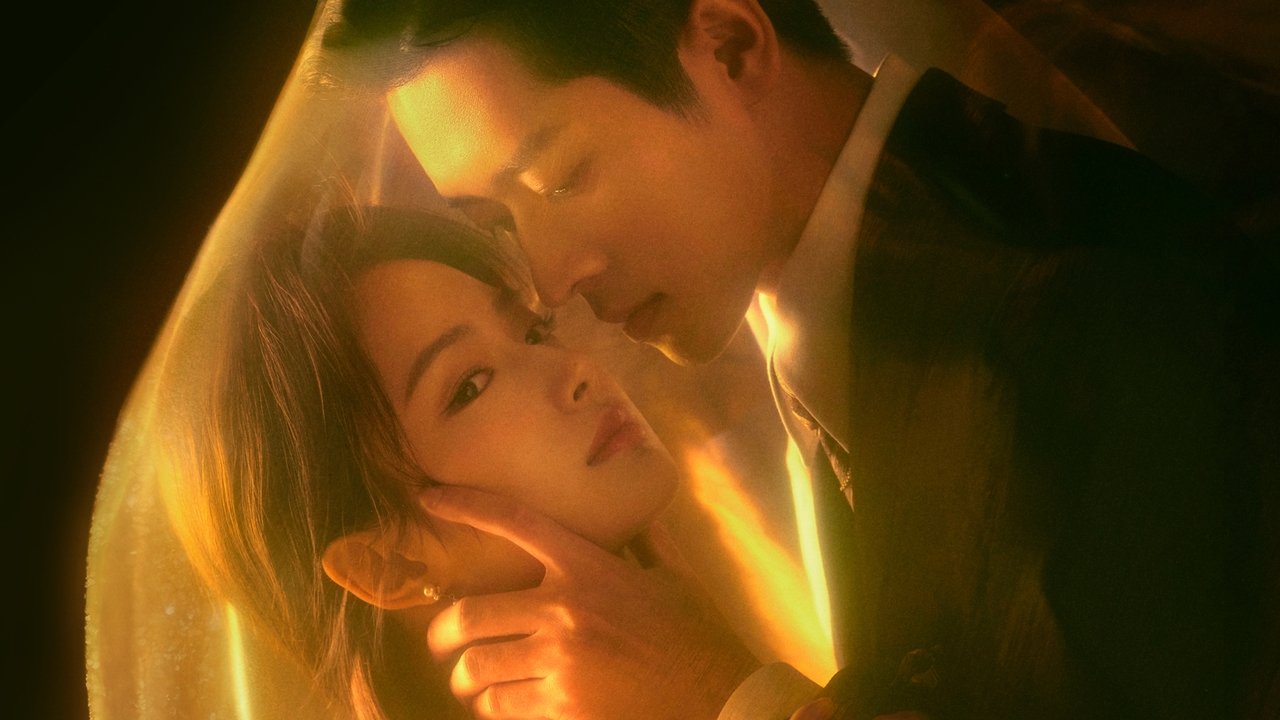
On 12 October two Chinese dramas premiered a few hours apart. Mango TV and Hunan Television opened The Lament of Autumn (玉簟秋), a romance set among the warlords of the 1920s, with a second female lead who a year earlier had been one of the top names of the phone-screen micro-drama world. Tencent Video opened What a Good Girl (好一个乖乖女), a 24-episode series for a horizontal screen, remade from a vertical micro-drama that had been watched more than four billion times. The two shows have nothing in common as stories. As business they are the same story, and a commentary in The Paper (澎湃新闻), the Shanghai news site, gave it two names that evening: ren shang'an (人上岸, "people coming ashore") and IP shang'an (IP 上岸, "IP coming ashore"), IP meaning a story property. The actors are moving up from short to long, and so are the properties. The traffic between China's two drama industries has started running both ways.
What "downstream" used to mean
Weiduanju (微短剧, "micro-drama") is the Chinese term for the serials shot for a phone held upright, a few minutes an episode, each episode ending on a hook; "vertical" and "horizontal" in this story mean the phone screen and the television screen. Since September this year the regulator has a legal definition: a series whose episodes run under twenty minutes, with a clear main plot, a continuous story and prominent characters. The format's scale no longer needs arguing. By figures the regulator's research centre published through the China Netcasting Services Association in August, the Chinese micro-drama market passed 100 billion yuan in 2025; its users numbered 696 million by mid-2025, and in December 2025 the average user spent 129 minutes a day on micro-dramas, which for the first time was more than they spent on long video. Hongguo (红果短剧), the free, advertising-funded micro-drama app owned by ByteDance, had more than 356 million monthly users in May 2026 according to the analytics firm QuestMobile, up 79 per cent in a year.
For most of that rise the long-drama side treated the format as a cheap downstream outlet. The typical move was chang gai duan (长改短, "long adapted to short"): a hit television series would spawn a cheaper vertical spin-off, released on Douyin (China's TikTok) or Hongguo to keep the brand warm. The best-known case is My Journey Home Has Wind (我的归途有风), a micro-drama spun off from the 2023 hit Meet Yourself (去有风的地方), which its producer wrote in the People's Daily (人民日报) in June 2024 had drawn 190 million views. Useful, inexpensive, and clearly secondary: the long drama was the asset and the short one was the merchandise.
IP coming ashore: why remake a four-billion-view hit as 24 episodes
What a Good Girl reverses the direction. The original, starring Ke Chun (柯淳) and Yu Yin (余茵), went out over the 2025 Spring Festival as an 88-episode vertical serial and became one of the format's biggest hits, with more than four billion plays across platforms. Its engine was a heroine who plays the obedient daughter while plotting her revenge, and a plot that, as The Paper put it, delivered an unmasking, a broken engagement or a counter-strike every three minutes.
Tencent's remake keeps the premise and almost nothing else. The leads are new, Xu Mengjie (徐梦洁) as Lu Mingyu (鹿鸣于) and Ren Shihao (任世豪) as Duan Xiuming (段休冥). The 88 vertical episodes become 24 horizontal ones of about twenty minutes, a length Tencent files under its own label zhongju (中剧, "mid-length drama"). Three new storylines were added: a wedding called off at the altar, a staged death the two leads plan together, and a reckoning staged at an art exhibition. The male lead, whom The Paper calls a "tool-type" lead in the original, is rewritten as an opponent with a position of his own. On launch day Tencent's in-site heat index, its popularity score, reached 19,320 and the show topped both the platform's rising chart and its short-drama chart, by figures carried on Sina Entertainment (新浪娱乐) on 15 October.
What the long platform bought is not a script but a proof. The vertical run had already tested the hook, the character and the audience cheaply, the low-cost trial The Paper says is now the short form's job, so the horizontal version could spend on what the vertical never had time for: watching the heroine endure, day by day, before she strikes. The Paper's writer, Shi Ziyi (石子怡), wrote:
短剧的“快”和长剧的“慢”不是替代关系,而是同一故事在不同时长里做不同事。
The short drama's speed and the long drama's slowness are not rivals; they are the same story doing different jobs at different lengths. Tencent has also built the incentives to match. In a speech in March, Li La (李啦), a deputy general manager in Tencent Video's drama production department, said that five horizontal short titles had each passed ten million yuan in revenue share over the 2026 Spring Festival, that the platform would extend the revenue-sharing window to as long as three years, and that producers developing the same IP as a series could stack extra bonuses on top, according to a transcript the trade analyst DataEye published on The Paper's platform.
The risk is equally plain. Tencent recast the leads instead of bringing back Yu Yin and Ke Chun. The Paper's comment on the casting:
换徐梦洁而不沿用余茵,本质是重做而非续作。
Four billion plays had bound the original pair to the audience, and the first reactions showed it. Alongside the chart position, Sina Entertainment's coverage recorded fans of the vertical version complaining that the added back-stories and subplots had slowed the pace and diluted the shuang (爽, "the kick"), the format's word for its own payoff. The whole property is now being run in four lengths at once: the vertical original, the horizontal remake, a Korean adaptation and a cinema version that has issued casting calls.
People coming ashore: what a short-drama actor has to relearn
The other direction is harder to see on a chart and easier to see on screen. The Lament of Autumn is a conventional strong-plot Republican drama, directed by Ju Jueliang (鞠觉亮) from a novel by Ling Xi (灵希): an assassination, a ten-day wager to solve it, a contract between a warlord's heir and a female student, then family, armies and the saving of the nation. Two of its cast arrived by way of the short form, and a third name belongs to the other premiere.
Guo Yuxin (郭宇欣), who plays the second female lead Tao Ziyi (陶紫宜), took the roundabout route. A graduate of the Central Academy of Drama, she spent her first years in bit parts in long dramas such as Till the End of the Moon (长月烬明) and A Journey to Love (一念关山). In 2025 she broke out in micro-dramas: Midsummer Fendra (盛夏芬德拉), with Liu Xiaoxu (刘萧旭), was reported to have reached three billion plays faster than any title before it, several more of her serials passed a billion each on Hongguo, and in June 2026 Midsummer Fendra was named one of the year's outstanding micro-dramas at the 31st Shanghai Television Festival. Tao Ziyi is a tycoon's spoiled second daughter whose love for the hero is not returned, a part that runs from heat to obsession and from indulgence to abandonment. The Paper described what the role asks of her this way:
郭宇欣要做的,是把短剧式一击即中的爆发力,分配成慢变量。
Her task is to take the micro-drama's one-hit explosive force and spread it out as a slow variable. In a vertical serial an actor has a three-minute episode to land an emotion before the hook; the acting that works there is a close-up, a peak, a cut. A television drama of several dozen episodes cannot explode in every one of them. The arc from spoiled to slighted to vengeful to self-destroying has to be laid across weeks, which means holding something back in the early episodes so that the turn, when it comes, is not hollow. Early coverage on Sina Entertainment, the day after the premiere, credited her with holding the camera in her first long-drama role and noted, at the same time, that some scenes still carried the habits of the short form.
Cheng Lei (丞磊), the male lead, made the same journey earlier and more slowly. He spent years in low-budget web series and polished short dramas, drew notice as the cold-faced general Xiao Hansheng (萧寒声) in Beauty of Resilience (虚颜) in 2022, and became known to a wide audience as Gong Shangjue (宫尚角) in My Journey to You (云之羽) in 2023, a supporting part played small. Since then he has moved through leading roles to a Republican warlord who has to be flighty early, calculating in the middle and finally serious. The Paper's reading is that the short-form years taught him high-frequency hits and that the long form has taught him when to hold them back.
The third name belongs to the other show. Ke Chun, the male lead of the vertical What a Good Girl, did not come back for the remake. In June 2026 he appeared instead in Scorching Summer (炽夏), a Hunan Television and Mango TV modern drama, as the villainous supporting character Luo He (骆河), his first role in a long-form series. The pattern is the same as Guo Yuxin's: a supporting part, not a lead, in a drama whose main cast comes from the long side. The platforms are buying the audience these actors bring and asking them to earn the rest.
The fatigue that makes the exit matter
The timing is not an accident, and the format's own audience explains why. In mid-October, days after the two premieres, the hashtag Hongguo duanju jiangzhi (#红果短剧降智#, "Hongguo micro-dramas make you stupid") trended on Weibo, China's main microblog. Users posted screenshots of their phone usage showing more than ten hours a day in the Hongguo app and described feeling slow and unable to stop after binges of high-density twist serials. Zou Ying (邹莹), deputy head of clinical psychology at the Second Affiliated Hospital of Zhejiang Chinese Medical University, gave the explanation the press ran with, as carried by the China News Service's finance site Jingwei (中新经纬) on 16 October: the dense hooks keep stimulating dopamine until reserves are spent, so attention and comprehension fall off for a while. In her words:
并非真的智商下降,而是多巴胺储备透支
Not everyone agreed that the problem was the format. One reply carried in the same report was that watching short dramas is personal leisure, that many AI-made serials are now well produced and that there is no need to praise one thing by stamping on another. The third-party figure in the same report: in August 2026 Hongguo users averaged around 125 minutes a day in the app, more than Douyin's 112 to 120.
The complaint behind the hashtag is older than the hashtag. State broadcaster China National Radio (央广网) wrote in August that AI-animated micro-dramas alone had released more than 220,000 titles in the first half of 2026, of which only about a thousand passed 100 million plays, and drew the conclusion in one sentence:
海量同质化内容堆积,观众审美疲劳,流量红利见底,粗放量产模式走到尽头。
Masses of identical content have piled up, audiences are tired, the traffic dividend is exhausted and the crude mass-production model has reached its end. Figures published by the association point the same way: in the first quarter of 2026 about 128,000 micro-dramas went online, more than 95 per cent of them AI-generated, yet over the Spring Festival the live-action titles, one fiftieth as many, drew 25 times the plays. Hongguo announced in April that it had taken down 3,522 low-quality AI-animated serials in a nine-day sweep, and the same China National Radio report described the leading platforms lowering the recommendation weight of formulaic "kick" content and opening dedicated channels for rural, realist and revolutionary-history themes.
The regulator has moved in the same direction. The Micro-Drama Development and Management Measures (微短剧发展管理办法), in force since 1 September, divide micro-dramas into three classes by budget and subject, each with its own registration and distribution licence. A separate plan published in May sets a target of a thousand quality micro-dramas a year by the end of 2026 and tells the industry to "firmly abandon" the pursuit of traffic for its own sake. Beijing's Chaoyang district published twenty support measures for micro-drama companies in September. The money and the rules point the same way: fewer titles, better made.
Seen from there, the two premieres of 12 October are not only long drama discovering a new supplier. They are the short form finding a door out of its own race to the bottom. An IP that has proved itself in three-minute bursts gets twenty-minute episodes in which to breathe; an actress who has learned to land a feeling before the hook gets dozens of hours in which to build one. The Paper's writer closed on this line:
短剧不再是长剧的下游工厂,而是平行的内容源头。
The short drama is no longer the long drama's downstream factory but a parallel source of content. Whether that holds depends on what happens next on screen: whether What a Good Girl keeps its audience once the novelty of comparison fades, and whether Tao Ziyi's turn lands in the back half of The Lament of Autumn. For viewers outside China the stakes are not abstract. The vertical serials on ReelShort and DramaBox are products of the same Chinese industry; the association puts overseas micro-drama revenue at 1.525 billion US dollars for the first eight months of 2025, nearly triple the year before. When that industry starts feeding China's long dramas instead of only feeding on them, the shows that reach international platforms a year from now will have been shaped by it. The Paper's commentary opens with this sentence:
短剧和长剧从来不是两个行业,而是一套工业体系的两套工具。
Short drama and long drama were never two industries. They are two sets of tools in one industrial system, and the people who can use both are the ones to watch.
Want to talk about this? Join the conversation on our Discord →
Get the newsletter
New drama guides, news and reviews in your inbox. No spam, unsubscribe any time.
Or subscribe by RSS: feed.xml