The Tang Mist: Detective Di Renjie Goes South in a 25-Episode Mystery Season
A guide to the Tencent Video mystery The Tang Mist: Feng Shaofeng as Detective Di Renjie investigating supernatural-looking cases in Jiangnan, how the 25-episode season is built, and why critics and viewers weigh its atmosphere against its deduction differently.
Why this one
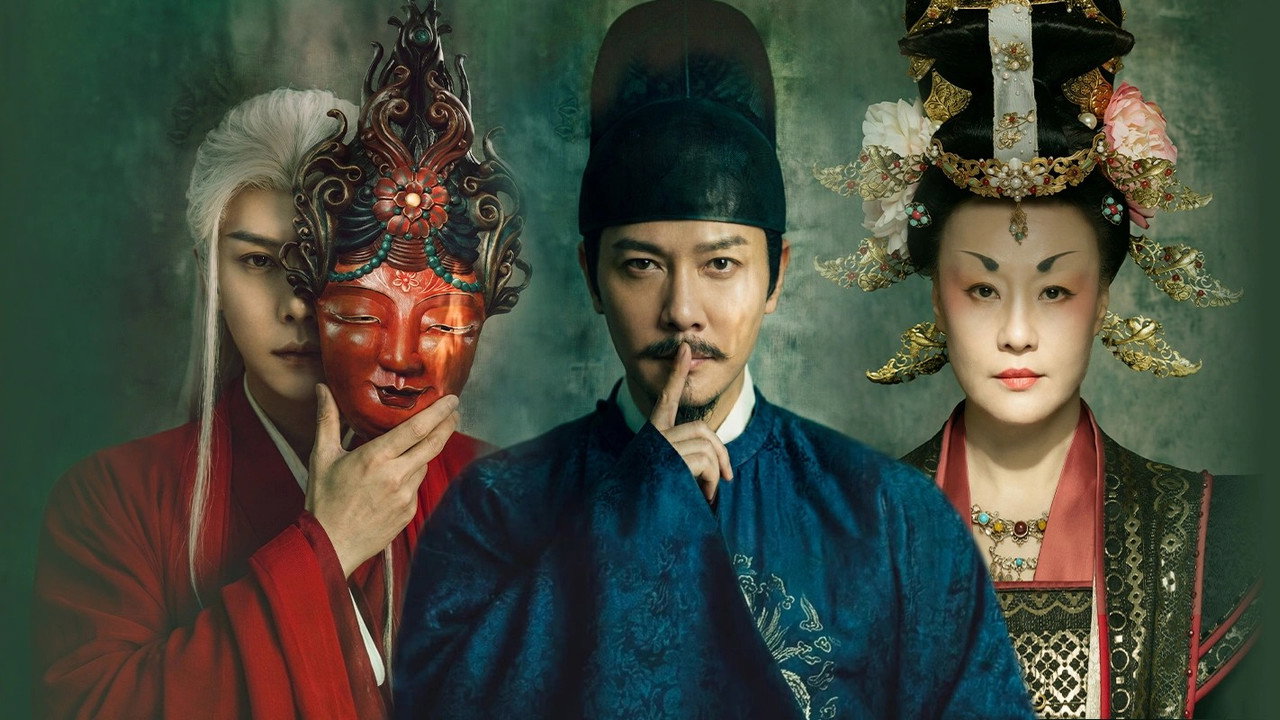
Detective Di Renjie has been a fixture of Chinese crime fiction for well over a century, and The Tang Mist (大唐迷雾, Da Tang Mi Wu) sends him out of the capital. Feng Shaofeng (冯绍峰) plays Di Renjie (狄仁杰). According to the synopsis published by Hong Kong outlet HK01, he disagrees with Empress Wu's willingness to sacrifice innocent people for her ambitions, leaves the court and travels to Jiangnan Circuit (江南道, the lower Yangtze region). There, cases that look supernatural sit on top of corruption and power struggles. Wu Junmei (邬君梅), billed as Wu Zetian (武则天), stands for the throne he walks away from.
The series is a Tencent Video original. It premiered on May 23, 2026, and the season finale aired on June 2, so all 25 episodes are out. Plot points here stay at the level of the opening cases.
The setup
The story is set in the Chuigong (垂拱) reign period of Wu Zetian's rule. The first case, as Taiwanese outlet Marie Claire describes it, is 42 young women found dead and smiling, seated on the ground. Later cases named in a Beijing Daily commentary include a water ghost, a fox spirit, a corpse in a red dress and a Nuo (傩, "masked exorcism ritual") god who manifests. This is the zhiguai (志怪, "tales of the strange") mode: the supernatural is the surface, and Di Renjie's job is to find the people behind it.
The structure is episodic with a through line. Marie Claire says most cases close within two episodes, and Beijing Daily describes standalone cases strung along a main storyline. The main storyline is the conspiracy that the HK01 synopsis places behind the prosperous surface of the region.
Cast and crew
-
Feng Shaofeng (冯绍峰) as Di Renjie (狄仁杰)
-
Wu Junmei (邬君梅) as Wu Zetian (武则天)
-
Li Yu (李彧) as Duan Shisi (段十四)
-
Shao Yun (邵芸) as Chu Qinglan (楚青岚)
-
Shan Jingyao (单敬尧) as Lin Buyan (林不言)
-
Xu Haiqiao (徐海乔) as Zhuang Luobai (庄洛白)
Xiang Qiuliang (项秋良) and Xiang Hesheng (项河生) direct, and Zhang Zhaozhe (张兆喆) is credited as screenwriter. The English title is the one used by TMDB and MyDramaList.
Di Renjie on screen, from the case novels to now
Di Renjie was a real official of the Tang and Wu Zhou dynasties (630 to 700), and Wu Zetian is recorded as having called him Guolao (国老, "State Elder"). The detective is a later invention. The first gong'an (公案, "court-case" fiction) novel about him, Di Gong'an, appeared in 1890, and the Dutch diplomat Robert van Gulik translated part of it as Dee Goong An in 1949, then wrote his own Judge Dee novels. English-language readers know the character through those books.
In Chinese television, the reference point is CCTV-8's Amazing Detective Di Renjie (神探狄仁杰, Shentan Di Renjie), which premiered in 2004 with Liang Guanhua (梁冠华) in the lead and was followed by sequels. On film, Andy Lau played the detective in Detective Dee and the Mystery of the Phantom Flame (2010), and Mark Chao took the role in two prequels by Tsui Hark.
Feng Shaofeng already has a link to this lineage: English Wikipedia lists him as Yuchi Zhenjin in Young Detective Dee: Rise of the Sea Dragon (2013) and Detective Dee: The Four Heavenly Kings (2018), both Tsui Hark productions. Chinese commentary on the new series keeps returning to the older benchmark. A Beijing Daily-republished commentary praises the CCTV version for its cases within cases and compares the new show unfavourably, saying Di Renjie reaches conclusions on the strength of his own assertions while the evidence is handed to him. A NetEase critic, Ma Qingyun, instead sets it beside Tang Chao Gui Shi Lu (唐朝诡事录), another Tang-set supernatural mystery, and calls it a lower-cost counterpart of that show.
A 25-episode season
The format is the clearest difference from the 2004 series, which Wikipedia lists at 30 episodes of about 45 minutes. The Tang Mist has 25 episodes of about 25 minutes, by Marie Claire's count 25 to 27 with credits, which comes to roughly ten hours in total. Tencent's page labels it Season 1.
At launch, members received four episodes at noon, with the fifth unlocked early for the top-tier SVIP members, and then two episodes at 18:00 each evening, according to HK01. The short running time drew comment: Marie Claire reports that some viewers asked whether a high-budget series running at this length had become a duanju (短剧, "short drama"), while others liked that the pacing kept the cases moving.
Feng Shaofeng and Wu Junmei
Feng Shaofeng's career in historical drama runs from Palace (2011) to The Story of Minglan (2018), where he played the male lead Gu Tingye. Here he plays an older, composed Di Renjie. Beijing Daily commentary describes the performance as seasoned and sharp, and Marie Claire reports that viewers found his acting steady and suited to the role. An English-language MyDramaList reviewer, rating the show 7.5 overall, likewise singled out his dignified middle-aged portrayal.
Wu Junmei, born in 1966 in Shanghai, began her film career in The Last Emperor (1987) and is known internationally from The Joy Luck Club (1993). Her Wu Zetian is the other name on the poster, and the pairing is a detective and the ruler he leaves behind, at a distance. A NetEase commentary written after the first five episodes counted her appearance as a single scene opposite Feng in the first episode, and described the role as closer to a guest part than a female lead. A Tencent News preview said her screen time is limited but her presence is strong. The look of her Wu Zetian drew comment in both directions: Beijing Daily praised the image, while Marie Claire reports that some viewers objected to the eyebrows and makeup.
Domestic reception and the MyDramaList view
Chinese-language commentary is divided. The criticisms are consistent: the deduction is thin, the supporting detective team is thinly drawn, and the script does not match the production budget, in Beijing Daily's phrasing. The NetEase critic judges the logic of the second case unconvincing and calls the series one to watch for fun. Marie Claire calls reception polarized and reports one-star reviews on Douban (豆瓣, the main mainland review site). Praise is just as specific: a Chinese horror atmosphere credited to director Xiang Qiuliang's art background, animated opening titles, a romance-free plot and Feng's bearing. A Tencent News preview before launch noted the lack of a love storyline and the emphasis on the ensemble.
On MyDramaList, the English-language database, the series has appeared with a score in the mid-7s out of 10 from a modest number of raters, and the figure moves as more people rate. The English-language and Chinese-language commentary name the same strengths (atmosphere, Feng's performance) and the same weakness (deduction), so the difference lies in how much weight each audience gives to mood against reasoning.
What overseas viewers are saying
The overseas conversation is small. MyDramaList lists the show as The Tang Mist, with Feng credited under his English name William Feng, and carries a handful of written reviews. The review, which rates the show 7.5 out of 10, praises the eerie opening and the visuals and Feng's dignified Di Renjie, then says the detective's deductions rest on sudden inspiration, and that most of the cast are one-dimensional. These are viewers who chose to post, not a poll.
Where to watch
The series streams on Tencent Video in mainland China. Overseas listings point to WeTV, Tencent's international service, and TMDB and MyDramaList list Tencent Video as the original network. We found no confirmation of a Netflix release. Availability varies by region, so check WeTV in your country first.
Want to talk about this? Join the conversation on our Discord →
Get the newsletter
New drama guides, news and reviews in your inbox. No spam, unsubscribe any time.
Or subscribe by RSS: feed.xml