The Legend of the Condor Heroes (2017): An Easy First Door into Jin Yong's Wuxia
The 2017 series of Jin Yong's much-adapted novel: a slow, honest boy and a quick-witted girl in a country at war, how this version compares with the classics, and why it reads differently at home and abroad.
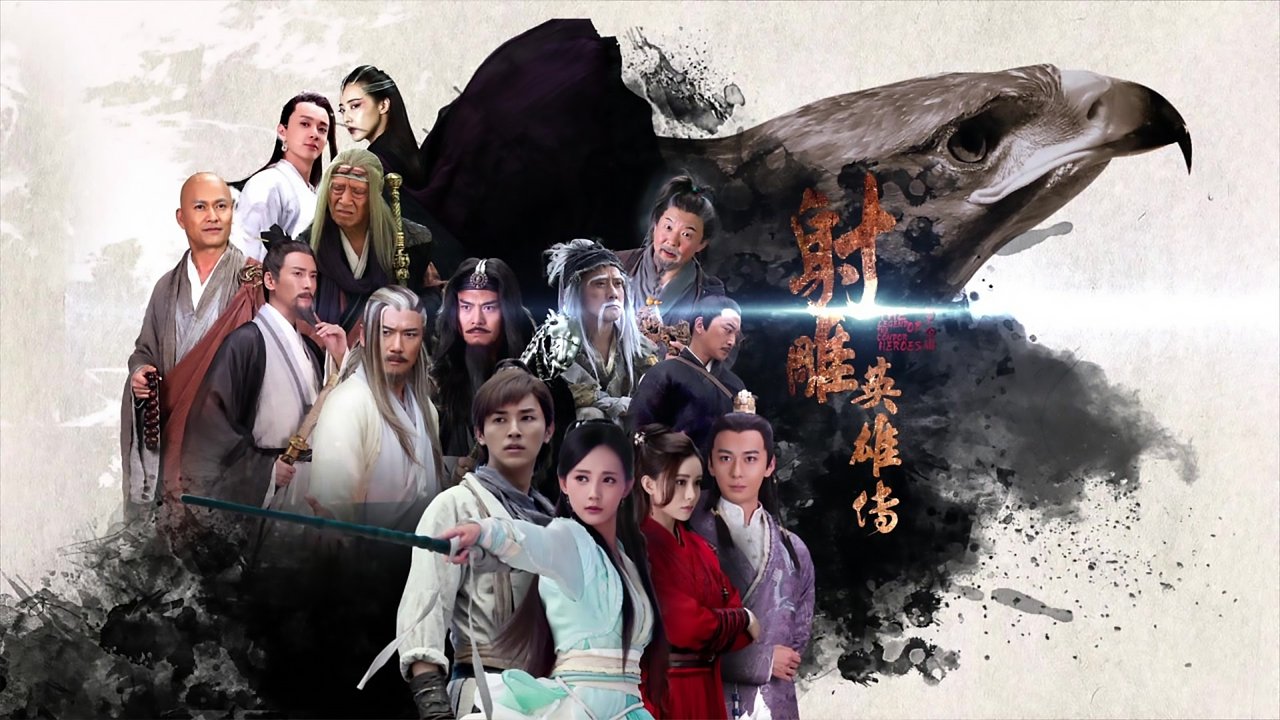
Why this one
Jin Yong (金庸) wrote more than a dozen martial-arts novels, and The Legend of the Condor Heroes is where many readers start. It has a hero with no talent for anything but persistence, a heroine who talks circles around everyone, and a war that keeps pressing in on both of them. The 2017 television version, 52 episodes that began on Dragon TV (东方卫视) on 9 January 2017 and ran in parallel on iQIYI (爱奇艺), is a full-length mainland remake of the 1983 Hong Kong series. For anyone who has never seen a wuxia drama, it is a reasonable first door.
Wuxia (武侠, "martial-arts chivalry") is fiction about fighters who live by a code, set in a historical world, with no gods and no magic. Its fantasy cousin, xianxia (仙侠, "immortal heroes"), adds deities, spells and cultivation, and a lot of the Chinese dramas that reach English-language viewers belong to that family. Condor Heroes does not. The people in it are very good at fighting, and that is all.
Chinese readers attach a phrase to Guo Jing (郭靖): wei guo wei min, xia zhi da zhe (为国为民,侠之大者, "for the country and the people, the greatest kind of hero"). The story's interest is in how a boy raised on the steppe, short on cleverness, gets there.
The setup
The novel opens in the Southern Song (南宋), in the years when the Jin dynasty (金) holds the north and the Mongols are rising beyond it. Two sworn brothers, Guo Xiaotian (郭啸天) and Yang Tiexin (杨铁心), are betrayed by a Jin prince, Wanyan Honglie (完颜洪烈). Guo Xiaotian dies and Yang Tiexin vanishes. Each leaves a pregnant wife, and each wife bears a son. The Taoist Qiu Chuji (丘处机), who had befriended the brothers, names the boys Guo Jing and Yang Kang (杨康), after the Jingkang Incident (靖康之变), the 1127 fall of the Song capital. The names are an instruction to remember.
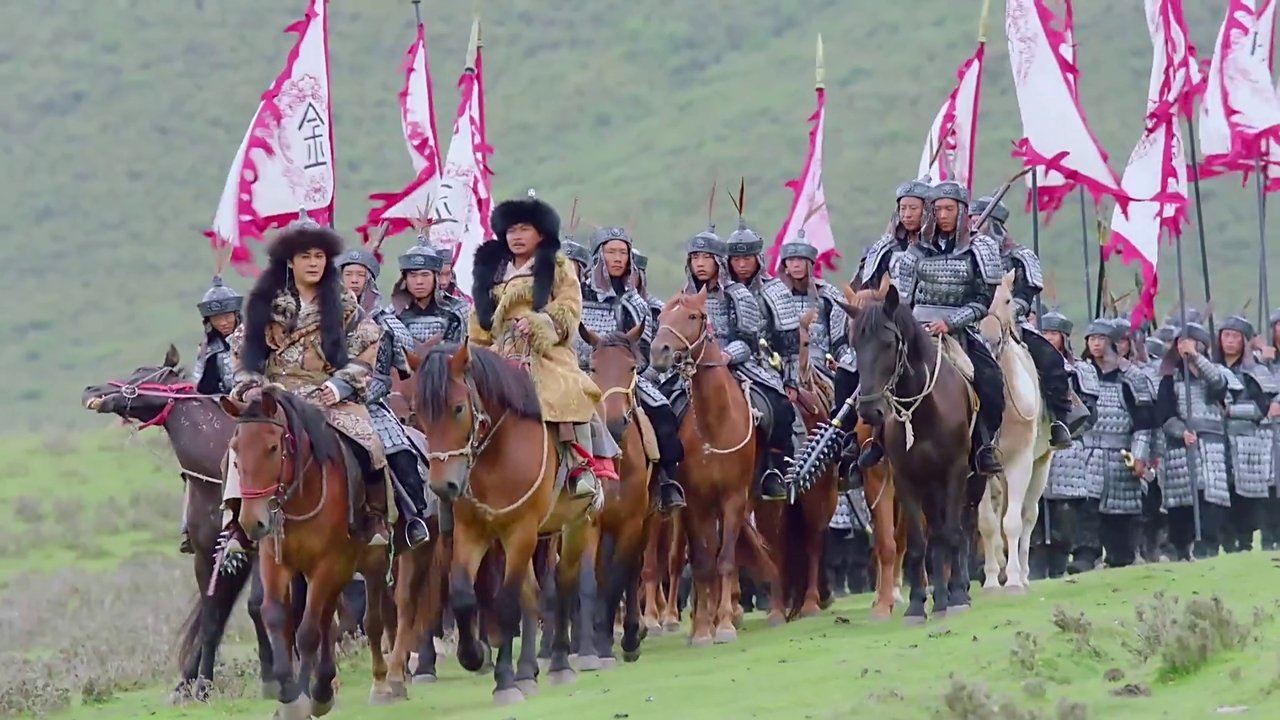
The boys do not end up in the same place. Li Ping (李萍) carries Guo Jing into Mongolia, where he grows up under the protection of Temujin (铁木真), the future Genghis Khan. Bao Xiruo (包惜弱) is taken in by Wanyan Honglie, and Yang Kang is raised as a Jin nobleman who has no idea who his father was. One is brought up poor and honest among enemies of the Song; the other is brought up rich among the very men who ruined his family. The book spends its length on what each of them does with that start.
 Save
The 2017 series covers this opening in its first episodes: Qiu Chuji's fight in the snow, Guo Jing's birth on a battlefield, his training by the Seven Freaks of Jiangnan (江南七怪), his skill with the bow, and Temujin's offer of a betrothal to his daughter Huazheng (华筝). Then Guo Jing travels south, and meets Huang Rong (黄蓉).
Huang Rong is the daughter of Huang Yaoshi (黄药师), a martial master who lives on Peach Blossom Island and answers to no one. She is quick, mischievous and, for a time, disguised as a beggar boy. Her wit and his single-mindedness are the engine of the book: she works out what he cannot, he holds to what she would sooner bargain away. The relationship is a love story, but it is also a training. She teaches him to look at the world, and he shows her what is worth the trouble.
The greatest hero, built from ordinary stock
Guo Jing is not a prodigy. In the novel he is slow, and the people who teach him have to repeat themselves. His strength is that he does not stop, and that he cannot be talked into betraying anyone. Jin Yong lets that simplicity carry the plot: the master who teaches him, the girl who loves him and the Khan who trusts him all respond to the same quality.
In the sequel, The Return of the Condor Heroes (神雕侠侣), Guo Jing has become the defender of Xiangyang (襄阳), the city that holds the Mongols off the Song. The third novel, The Heaven Sword and Dragon Saber (倚天屠龙记), reveals that he and Huang Rong died in the battle for it. That is where the phrase about the country and the people leads. The first novel supplies its early chapters: a boy who starts by keeping promises to his teachers, then to his friends, then to people he has never met.
Yang Kang is the counterweight. He is clever, charming and divided, and he keeps choosing the comfortable side. A viewer who watches only Guo Jing will miss half of the book's argument, because the question is not whether heroism is rare but what it costs to refuse it. The 2017 series gives Yang Kang and Mu Nianci (穆念慈), who falls for him, room to carry that other line of the story.
Why this novel keeps being remade
Hong Kong, Taiwan and mainland studios have made television versions of the book since 1976. The four that matter for comparison are these:
-
1983, TVB (Hong Kong): Felix Wong (黄日华) as Guo Jing, Barbara Yung (翁美玲) as Huang Rong. 59 episodes, in three parts.
-
1994, TVB: Julian Cheung (张智霖) and Athena Chu (朱茵).
-
2003, mainland: Li Yapeng (李亚鹏) and Zhou Xun (周迅), 42 episodes.
-
2008, mainland: Hu Ge (胡歌) and Ariel Lin (林依晨), 50 episodes.
Why this story and not another? The book is built for adaptation. Its opening is clean enough to survive any cut: two babies, two upbringings, one choice. Its hero is an everyman, which suits actors who are new to the screen. And it has a built-in generational clock. The 2017 version was itself made as a remake of the 1983 series, which shows the cycle at work: each generation of viewers gets its own Guo Jing and its own Huang Rong, and each judges the next pair against the one it grew up with.
The novel itself has been revised twice. Jin Yong reworked it in the 1970s and again between 1999 and 2002. English readers can now read it in MacLehose Press's four volumes, begun in 2018 as A Hero Born.
What this version does differently
The 2017 series made a virtue of limits. In a January 2017 interview Guo Jingyu (郭靖宇), who supervised the production, said that stars would not give a long series enough shooting days, so he cast newcomers in the leads and accepted the risk of a poor result; effects work was cut back as well. The four leads were Yang Xuwen (杨旭文) as Guo Jing, Li Yitong (李一桐) as Huang Rong, Chen Xingxu (陈星旭) as Yang Kang, and Meng Ziyi (孟子义) as Mu Nianci. The supporting cast around them is seasoned: Michael Miu (苗侨伟) as Huang Yaoshi, Ray Lui (吕良伟) as the monk-king Yideng (一灯大师), and Tay Ping Hui (郑斌辉) as Temujin.
Early Chinese coverage praised it for staying close to the book. A piece republished by Jiemian (界面新闻) on 18 January 2017 called the locations and props more refined than in earlier versions, welcomed fight scenes that do not lean on effects, and said the costumes avoid the garish look of recent period dramas. Chinese Wikipedia lists nine departures from the novel, among them a Huang Rong who sometimes leans on Guo Jing more than in the book and a larger role for Yang Kang and Mu Nianci, so "faithful" here means faithful in outline.
A Jiemian piece from 17 January 2017 was cooler. It described the leads as inexperienced and the production as offering no big names and no innovation, and complained of too many slow-motion shots and of stunt doubles with dance rather than martial-arts training.
Cast and crew
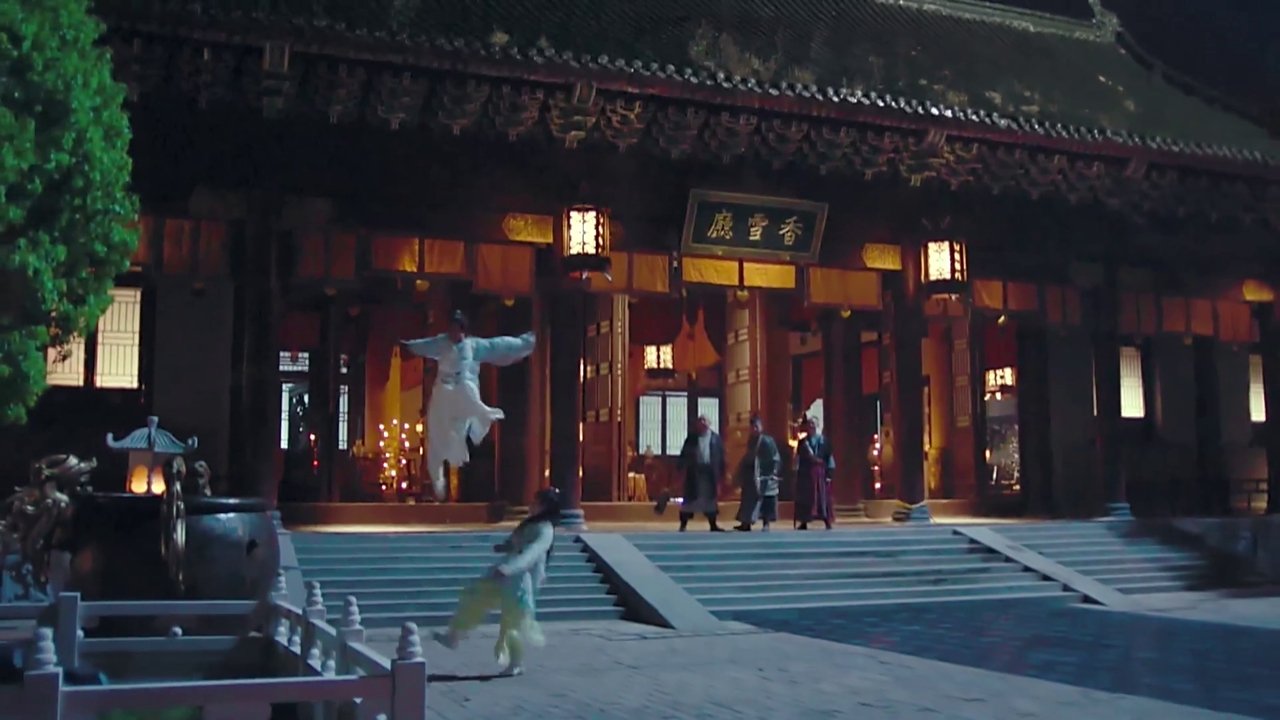
Jeffrey Chiang (蒋家骏) directed. Wu Dun (吴敦) produced, with Guo Jingyu supervising. The production was made by Huace Media (华策影视) and Perfect World Pictures (完美世界影视), with iQIYI taking part. The shoot ran mainly at Xiangshan Film and Television City in Zhejiang, with other locations in Zhejiang, Gansu and Inner Mongolia. Shooting wrapped in late August 2016.
 Save
Where to watch
iQIYI's international site, iQ.com, lists all 52 episodes and advertises English subtitles. Licences change, so availability varies by country.
The series was cut to 49 episodes in a Cantonese version for TVB Jade in Hong Kong, so check which cut you are watching.
At home and abroad
The evidence supports a narrower story than "popular at home, forgotten abroad" or the reverse. It is better described as a show judged by different yardsticks in different places.
At home. On Dragon TV, the run's ratings averaged 0.552 (CSM52, per Chinese Wikipedia), with a peak of 0.683 on 27 March. Without comparable figures for the earlier versions, the number cannot say much, and we have not found online-view totals. The Douban (豆瓣) score rose from 6.4 to 7.6 within days of the first episodes, according to the 17 January Jiemian piece, and a 2019 36Kr article gave it 8.0 from more than 50,000 raters. We found no comparable figures we could check for the other versions.
The picture at home, then, is a version that started from low expectations and won viewers over, while still being measured against the 1983 series, which the same Jiemian piece calls the classic and the other versions mixed in reception.
Abroad. The show aired on TVB Jade in Hong Kong from May 2017, with an average rating of about 24 points, and on Astro in Malaysia. Indonesia's antv broadcast it in 2023 with an Indonesian dub. On MyDramaList, the English-language fan database, it holds about 8.1 out of 10 from roughly 1,800 users. The 2008 version also stands at about 8.1, from roughly 1,400 users, and the 2003 at about 7.5 from about 300. Those samples are small, and the platform's audience is self-selected. We found no English-language critical consensus. A review on the wuxia site Seven Swords in August 2026 rated it 9/10, with reservations about uneven CGI and a pace that demands commitment.
What the contrast amounts to. At home, the 2017 version is measured against specific rivals, with Jiemian's coverage setting it against the 1983 classic. Abroad, English-speaking viewers mostly come to it without the 1983 and 1994 versions in their heads, and its MyDramaList score is level with the 2008 version's. That fits an easy-entry reading: a viewer with no memory of earlier versions has less to be disappointed by. Access matters too. The 2017 series is on iQ.com with English subtitles, and the sparse record of English-language discussion suggests it has not travelled as far as the book itself.
What we can say is limited. Domestically, it was well received, with Douban scores around 8. Abroad, it has a small but positive rating record and no measured viewing numbers.
Want to talk about this? Join the conversation on our Discord →
Get the newsletter
New drama guides, news and reviews in your inbox. No spam, unsubscribe any time.
Or subscribe by RSS: feed.xml