The Vanishing Beauty Learned Short-Drama Speed, Not Trust
The Vanishing Beauty packs a reversal into almost every night of its run and swaps the mistress showdown for an asset settlement. It borrowed the pace of China's vertical short dramas and skipped the part a 28-episode drama exists for: making you believe its people.
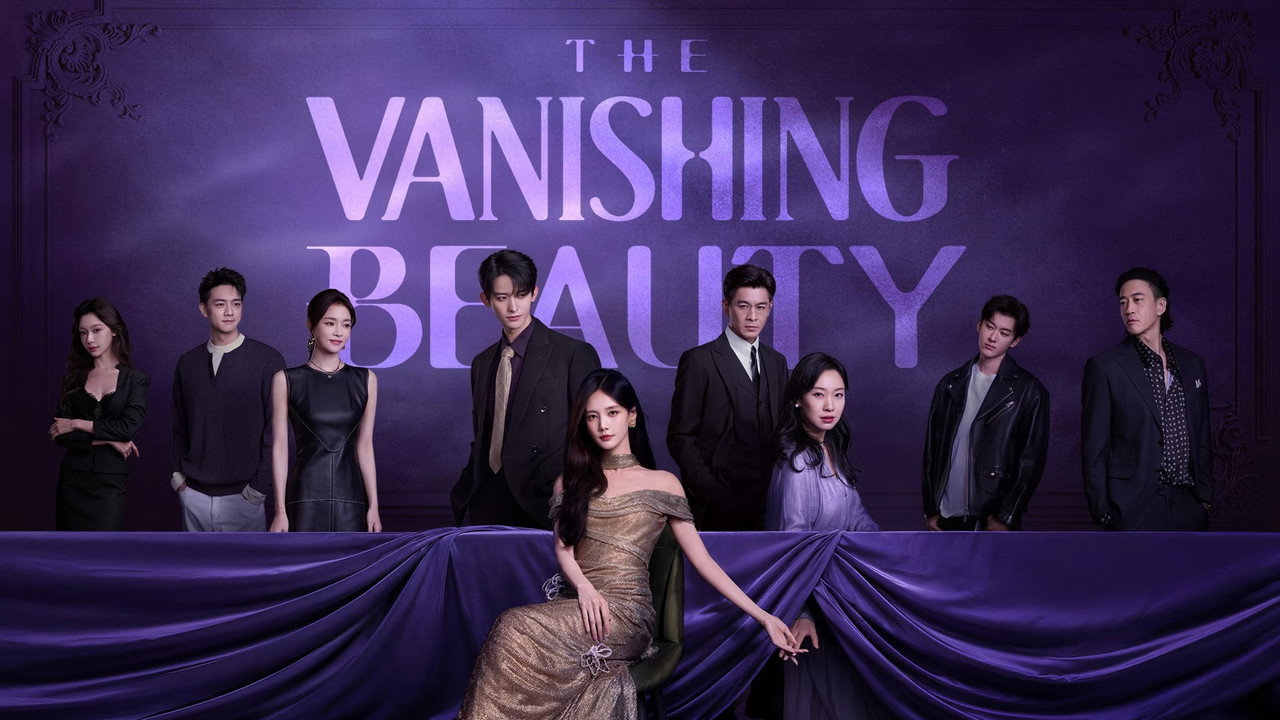
This piece discusses the whole of The Vanishing Beauty (Meiren Yu, 美人余), finale included.
On the morning of October 19 the official Weibo account of The Vanishing Beauty announced that "version 3.0" of its viewing guide had been released. At noon the next day, "version 3.0" of the character relationship chart was "unlocked." That evening Episode 24 went up on Tencent Video, and the last four episodes could be unlocked early through a paid "finale preview pack."
A family melodrama, marketed in the language of a game: version numbers, unlocks, packs. When Yu Meng (余梦), played by Li Yitong (李一桐), signs the divorce papers and takes off her ring, the account's caption for the clip is a verdict of its own: watching this, "one word: satisfying, done." The word is shuang (爽, "satisfying"), the term Chinese viewers use for the rush of a payoff.
The production knew what it was selling, and it sold. That night the hashtag "The Vanishing Beauty finale is so satisfying" reached the top five on Weibo's trending list.
The satisfaction is real. This piece is about something else. The Vanishing Beauty is a long drama shot at the pace of a short one. From China's vertical micro-dramas, duanju (短剧, "short drama"), with episodes a few minutes long at most and one hook in each, it learned speed, density and a cliffhanger every night. The one thing a 28-episode drama can do that a short drama cannot, which is make you believe its people, it never gave itself time for.
It really does not pad
Give it its due first. Twenty-eight episodes, two a night on Tencent Video from October 9; by October 20 the nightly release had reached Episode 24, and the finale was unlocked early through the paid pack. Twelve days, and a long drama was done.
Line up the official account's plot posts and almost every evening turns something over. On the 15th, Di Liren (狄立人), played by Qiao Zhenyu (乔振宇), sets a trap that makes Yu Meng "the madwoman in the attic." On the 16th she produces a psychiatric report at a shareholders' meeting to clear her name, and files for divorce that night. On the 17th he forges debts to strip the family's assets. On the 18th the divorce lawyer Jiao Xu (焦旭), played by Chang Huasen (常华森), reveals his own past, and Yu Meng announces her divorce at her own birthday dinner. On the 19th the death of the father of Lu Hui (卢蕙), Di's first wife, played by Wang Jiajia (王佳佳), is tied to Di. On the 20th: signature, arson, and the two wives joining forces.
It also swapped the vocabulary. The genre's usual showdown with the other woman is replaced by medical check-ups, evidence, shares, trust beneficiary rights and forged debts. In a clip released before the premiere, Yu Meng's first stop after learning of the affair is a hospital, for a check-up. It is the most human decision in the show: it makes you believe this is a woman who protects herself first.
The most careful accounting comes on the 19th. Yu Meng talks Lu Hui into seeing her son Harry's talent, and concedes a point herself: ten percent of the trust's beneficiary rights go to him. It is one of the few stretches of the series in which two people negotiate instead of waiting for the next reversal.
Viewers spotted the lineage early. Under a widely watched commentary video on Bilibili (哔哩哔哩), a scrolling comment read simply "a short drama." A comment posted on Douban (豆瓣), China's main review site, on finale night was more precise. It called the show a stock story of a social climber "eating the household" of an only daughter from the Yangtze delta, said the business storyline was slapdash, and allowed that compared with a short drama it has a little more of the setup and payoff that belong to long dramas, "but not much."
Fast, yes. The people cannot keep up
The trouble is in "not much." A short drama has a few minutes per hook and does not need you to believe anything, only not to swipe away. A long drama asks for twenty-odd hours, and the only thing it can offer in return is people you believe in. The Vanishing Beauty imported the hook density and left out the belief.
Lu Hui shows it most clearly. On the 17th she tells Yu Meng about years of suffering. On the 19th she decides to take her son and leave, and the same evening learns that Di may have had a hand in her father's death. On the 20th she bars him from the hospital room where her son lies burned. One person's transformation moves on the release schedule.
The show did give her a chance to slow down. The official account's own summary of the conversation on the 17th: Lu Hui envies Yu Meng's easy fortune and confesses years of hardship; Yu Meng sympathises, but points out that Lu Hui's choices were never her only way out. Both women stand up in that scene. Two days later she is at a hospital door threatening to take a man down with her.
The second most-liked danmaku (弹幕, the comments that scroll across the video) on Episode 27 reads: "Sister Hui now has a faint air of madness." A Douban forum thread is titled "Lu Hui's speech in Episode 19 is pretty absurd." Viewers were not refusing to accept her change. They had not been given time to believe it.
Di Liren too. Qiao Zhenyu gives the "hypocritical live-in son-in-law" what one Yangtze Evening News (扬子晚报) critic called a genteel-scoundrel air, and I agree. But the script hands him levels rather than a life: a trap, forged debts, an arson he puts a servant up to. When he smiles in Episode 28, danmaku read "Di Liren: there's a second level" and "I thought that was the hook for a season two." A villain watched as a game stage is a win for the mechanism, not for the character.
Look back at the account's "version 3.0" and "unlocked" and it is no surprise. Even the marketing ships in version numbers. The people never get a new version.
And Yu Meng. The official account's arc for her is a slogan: from "believing in good fortune" to "refusing to accept fate." Li Yitong, in an interview with Bazaar Film (芭莎电影) posted on October 12, was more candid. The early Yu Meng, she said, laughs, grieves and acts cute from the heart; the later one wears a mask and does all of it against it. She called the switch between real and fake "very drama." That is an actor describing a design, and viewers could see the design too.
The one time it slowed down
On October 14 the Yangtze Evening News ran a three-critic column under the headline "A long drama trapped in short-drama formulas." Its sharpest line is worth keeping whole: the show traded short-drama conflict for a hot premiere, and the logical shortcuts of a short drama cost it the credibility and depth of character a long drama should have.
The same column complained of a helicopter flying between city skyscrapers, which it called "baffling." Then the same critic singled out the scene after Yu Meng confirms the affair: hard and composed in front of others, she breaks down crying alone in her car. That scene, the critic wrote, "is very moving."
Put those two sentences side by side and you have the whole problem. The show can play a person; the car scene proves it. It just gives that kind of scene one scene, then hurries to the next reversal. What the critic remembered is the one time it slowed down.
The column's third critic spoke about the genre as a whole: dense affairs, identity reversals and calculations of interest are the stock formula of the family melodrama, and characters "must not become tools for driving reversals." The Vanishing Beauty's fault is not the formula. It runs the formula so fast that the people cannot keep up.
Three camps, and one that never came
Not everyone sees it my way. Before Douban opened a score, its most-upvoted comment, with more than 1,600 votes, was one line: "Why do modern women's awakening dramas all start with a man cheating?" That is the camp that finds it formulaic. A second camp sits under the most-watched Bilibili recap, where the top comment says the plot is melodramatic but has some sense to it, and that the writer has "actually run into something like it in real life." A third posted on Douban on finale night: the front half was satisfying and the back half too slow; a "no-brain satisfying drama"; "really tight plotting." Three comments, three directions.
Overseas viewers on the r/CDrama forum landed near the first camp, with a shrug: a bit predictable, fun to watch the heroine out-maneuver the schemes, and one warning in the first week that if the show did not get smarter it would be dropped.
Then there are the people who never came. On finale night a Weibo post with some sixty shares and likes asked whether the show, over so fast, had become a drama nobody could find, and blamed weak promotion. A satisfying drama's heat stays among the people already watching.
Li Yitong adds another voice. In Tencent Video's own interview, published around October 15, she said she hoped Yu Meng would exist only inside The Vanishing Beauty, and that no girl in real life would meet what Yu Meng meets. The actor hopes it is fiction; some viewers say it is true. A drama that splits people that way has touched something real. It just never crouched down to look.
Slogans and people
The series ends on a line from the show that is also its official slogan, and the danmaku chanted it back.
Teaching an audience to chant is a short drama's skill. Making it believe the person doing the chanting is a long drama's. The Vanishing Beauty wanted both and got the first.
Whether the next "short drama made long" learns the second, I do not know. The critics remembered a woman crying in a car. The danmaku remembered a slogan. The show gave both, one for a scene and one for 28 episodes.
Source: The Vanishing Beauty official Weibo account (Oct. 15–20); Tencent Video danmaku, Episodes 27–28; Yangtze Evening News, Oct. 14; Douban short reviews and forum (Oct. 9–21); Bilibili comments (Oct. 11–18); Bazaar Film and Tencent Video interviews with Li Yitong (Oct. 12–16); r/CDrama first-impressions thread (Oct. 9–16).
Want to talk about this? Join the conversation on our Discord →
Get the newsletter
New drama guides, news and reviews in your inbox. No spam, unsubscribe any time.
Or subscribe by RSS: feed.xml