Where the Mask Ends: The Youku Drama Where One Actress Plays Both the Real and the False Daughter
A guide to the Youku period drama Where the Mask Ends as it airs: Tian Xiwei in a double role as a night-soil girl and the heiress she replaces, an adaptation that split its novel's heroine in two, and a cast of veteran palace-drama villains.
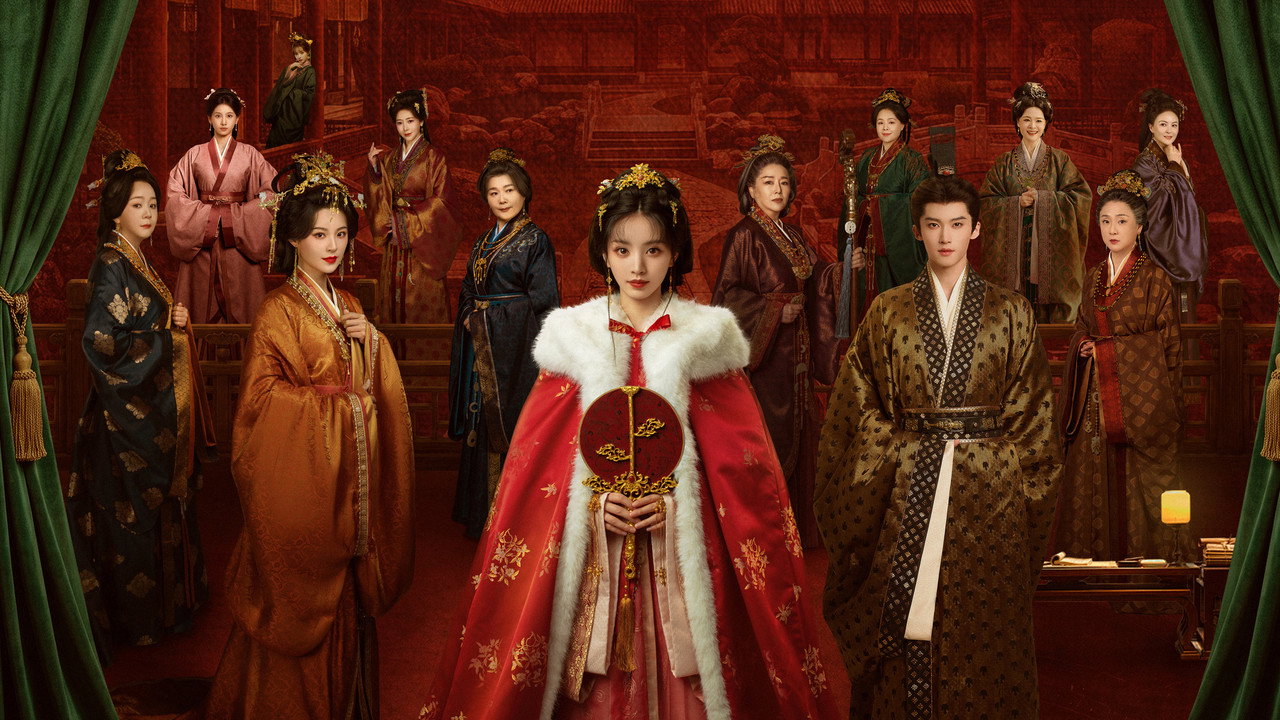
Why this one
Two women with the same face, one household that can only hold one of them. Where the Mask Ends (嫁金钗, Jia Jin Chai) premiered on October 16, 2026, and its pitch fits on a poster: a girl who empties chamber pots for a living is married into a duke's mansion in place of a noble lady, and the lady she replaces is played by the same actress.
Tian Xiwei (田曦薇) plays both parts. Overseas viewers know her best from Pursuit of Jade (逐玉), the romance that Netflix's coverage describes as one of the biggest C-dramas on the service this year, and she has long carried a "sweet girl" label in Chinese media. This is a deliberate break from it: a scrapper from the bottom of society and a vicious heiress, side by side. The show is also an unusual adaptation. Its makers rebuilt a web novel's single heroine into a pair of rivals, and a part of the book's readership has objected loudly.
It is airing now, so this guide covers the premise and the opening stretch only. It does not reveal what happens after the first few episodes.
The setup
The title refers to a chongxi (冲喜, "marrying to bring luck") marriage, an old custom in which a gravely ill man is married in the hope that a wedding will turn his fortune. The heir to a ducal house, Lu Zhuo (陆濯), lies unconscious after an injury. A bride is needed.
According to the state broadcaster's CCTV Video account, the heroine Wei Rao (魏娆) is the true daughter of a noble family, swapped as a child and sent out into the streets, where she grows up as A Chou (阿丑), a girl who collects night soil. The false daughter, Jun Dai (君黛), has been raised in comfort and is "quick to slap anyone she dislikes". When Jun Dai refuses to marry a man who may not wake up, A Chou, who looks exactly like her, is sent in her place.
The marriage is a trap and a chance at once. The household is full of calculation, and A Chou, who has nothing, has to scheme to survive. The English-language previews add that the husband recovers and distrusts her, and that A Chou starts to learn where she really comes from; the show's own promotion points the same way. How identities and loyalties settle is left to the show.
One caution if you read the English-language previews: some of them reverse the sisters, describing A Chou as a lookalike of the noble Wei Rao. The Chinese broadcaster's account above is the one we follow, with A Chou and Wei Rao being the same person.
Cast and crew
-
Tian Xiwei (田曦薇) as Wei Rao / A Chou and Jun Dai
-
Yan An (闫桉) as Lu Zhuo, the duke's heir
-
Liu Xiaobei (刘小北) as Qi Zhongkai
-
Pan Junya (潘珺雅) as Bi Tao
-
Dai Gaozheng (代高政) as Han Liao
-
Yin Wenxuan (尹文萱) as A Man
-
Mao Linlin (毛林林) as Zhou Fu
The director is Yang Long (杨龙), who also made Yan Hui Shi (雁回时). The screenwriter is Zhou Mo (周末), a writer of Story of Yanxi Palace (延禧攻略). The producer is Qiu Shui (秋水). The series is a Youku original, adapted from the Jinjiang (晋江) novel of the same name by Xiao Jia Ren (笑佳人). Netflix lists Alibaba Pictures as co-producer. Yan An was a member of the South Korean boy band Pentagon before he became an actor in China.
One face, two women
The central craft question is whether one performer can make two people who are never confused. The production's answer, as reported by Hong Kong's HK01 and CCTV Video, is physical: A Chou is shown stooped, hands tucked in, with a thin voice; Jun Dai raises her head and her eyebrows, and speaks lower. Tian reportedly does her own voice for both.
Yang Long frames the dual role in the poster's slogan: "one face, two kinds of ruthless, three changes of fate". As he told China News and the Beijing News on premiere day, the two women's ruthlessness has different roots. Jun Dai's is spoken and shown. Wei Rao's, he says, is the decisiveness of someone who has climbed up from the bottom.
Scenes with both women in one frame are where the choice is tested.
An adaptation that split its heroine
The novel began serialization on Jinjiang in May 2021 and runs to roughly 560,000 characters, per HK01. In the book, Wei Rao is a noble lady with a good face and a bad reputation who, before marrying the unconscious Lu Zhuo, sets three conditions on her bride price and on the length of the marriage. The story is a light, marriage-first romance.
The series keeps the luck-marriage but changes the engine. By HK01's count the book's one heroine is "split" into a street-raised true daughter and a spoiled false one, and in the week before the premiere book fans protested that only the title had been kept. The crew's reply is a different view of the genre. Yang Long says the satisfaction here does not come from a cheat code: revenge is only a motive, and the pleasure is in watching a person nobody expected to succeed pull herself up. Producer Qiu Shui says every woman in the show is rebuilding herself "in the ruins of fate", and that the story spans three generations of women.
Readers of the book should expect a different story.
A cast of veteran villains
The women around the heroine are a casting joke for anyone who watches palace dramas. CCTV Video's promotional piece points out that the show has gathered actors known for sharp supporting parts: Mao Linlin as Zheng'er in Prince of Lanling (兰陵王), Chen Sisi (陈思斯) as Concubine Cao in Empresses in the Palace (甄嬛传), Wang Yinan (王一楠) as Madame Xiao Qin in The Story of Minglan (知否知否应是绿肥红瘦), plus Chen Zihan (陈紫函), Dai Jiaoqian (戴娇倩) and Dai Chunrong (戴春荣).
For overseas viewers who know those shows, this is part of the draw: a household where every older woman has been through the genre before and has her own plan. The production says the point is a group portrait of women, not a single villain.
Gold, everywhere
The title's "gold" is taken literally. According to China News, the costumes are woven with gold thread, the sets use a lot of gold objects, and the palette clashes red with green in high saturation. CCTV Video adds that Tian's two characters wear over sixty costume changes on the upper body alone, many in gold-woven fabric, and that the jewellery uses filigree and chasing, two techniques belonging to the national intangible heritage of "filigree inlay" (花丝镶嵌). If you like your period drama bright and loud rather than muted ink-wash, the look will tell you in a minute.
Where to watch
Where the Mask Ends is a Youku original and airs on CCTV-8 in China, two episodes a night in the evening slot. Netflix has announced a global simulcast, and What's on Netflix expects a weekly release from around October 16. As of writing we have not seen Netflix's confirmed schedule, so check the app in your country. The episode count is reported as 30 for the Youku version (TMDB, DramaWiki) and 33 for the CCTV cut, in different edits.
Youku and Weibo pre-registrations passed five million before the premiere, as reported by China News and the Beijing News. That figure comes from the platform and is promotion, not viewing.
Want to talk about this? Join the conversation on our Discord →
Get the newsletter
New drama guides, news and reviews in your inbox. No spam, unsubscribe any time.
Or subscribe by RSS: feed.xml