Royal Nirvana
鹤唳华亭
A 60-episode 2019 Youku costume drama about a crown prince who keeps winning and keeps losing, centred on his bond with the emperor who is also his father.
 Save
- Premiere
- Nov 12, 2019
- Episodes
- 72
- Where to watch
- Youku
- Also known as
- He Li Hua Ting
About the drama
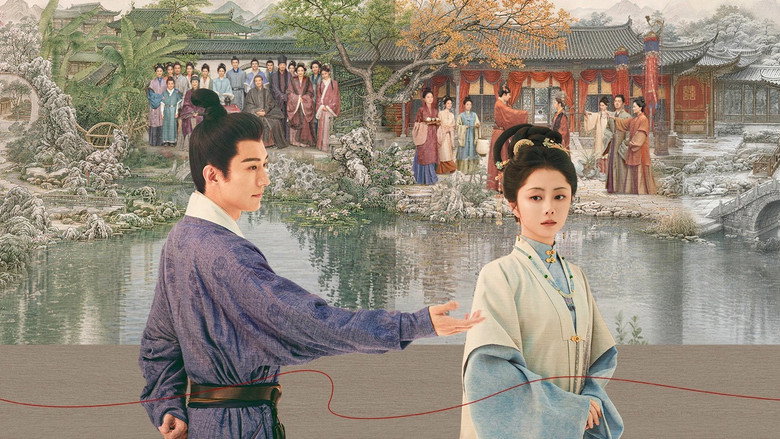
Most costume-drama heroes win. Xiao Dingquan (萧定权), the crown prince of Royal Nirvana (鹤唳华亭, He Li Hua Ting), wins too, case after case and scheme after scheme, and after every victory he has a little less than before. The drama premiered on Youku (优酷) on 12 November 2019 and ran 60 episodes. Its central relationship is the one between a prince and the emperor who is also his father.
That made it unusual in its season, and it split its audience. Douban (豆瓣), China's main user-review site, divided into high scores and low ones.
more
The prince is twenty when the story opens. He has just finished three years of mourning for his mother and still has not been capped. The capping ceremony, guan li (冠礼, "the coming-of-age rite for a young nobleman"), is no formality: for an heir, being capped means being allowed into government. The emperor keeps postponing it, while his eldest son, the Prince of Qi (齐王), born to a concubine, is already capped and married.
Lu Wenxi (陆文昔), an official's daughter, crosses the prince's path in a scandal over the civil-service examinations. When disaster falls on her father and brother, she enters his household disguised as a palace official. From there the story runs as a chain of "cases", each a contest of wits.
The dynasty is invented, so no history homework is needed, though everything you see points to the Song (960–1279). The novel's author supplied the footnote: objects, costume, art and customs follow the Song, while statutes, institutions and ritual follow the early Ming.
It is adapted from a web novel serialised on Jinjiang Literature City (晋江文学城) by Xue Man Liang Yuan (雪满梁园), who also wrote the screenplay.
The title comes from an old story in the Shishuo Xinyu (世说新语, "A New Account of the Tales of the World"). The poet-official Lu Ji (陆机), about to be executed in 303, asks whether he will ever again hear the cranes cry at Huating (华亭), his home. "The cry of the cranes at Huating" became shorthand for regret too late, for a life that politics swallowed.
On paper the show opened well, scoring 7.7 on Douban. Yet critics noted a gap between how good people said it was and how many watched. Joy of Life (庆余年) arrived two weeks later and took over the conversation.
The broadcast version was cut from 72 episodes to 60. The missing material reached Youku in 2020 as a separate 12-episode side story, Bie Yun Jian (别云间).
Words to know
- Custom & craft叉手礼folded-hands salute: a Tang-and-Song gesture of respectChashouli is the 'folded-hands salute', a gesture of respect in which the hands are crossed at the chest.
- Custom & craft点茶whisked tea: the Song way of beating powdered tea into foamDiancha is whisked tea, the way tea was prepared in the Song dynasty.
- Genre & trope番外'outside chapters': a side story or extra set in a finished work's worldFanwai means 'outside' chapters, an extra or side story that sits outside the main plot.
- Custom & craft冠礼capping ceremony: coming-of-age rite for a young noblemanGuanli is the 'capping ceremony', the traditional coming-of-age rite for a young man of the educated or noble classes, in which a cap is pl…
- History & office教坊司the imperial entertainment bureau, where condemned officials' women were sentThe Jiaofangsi was the court's bureau of music and entertainment, which organised ceremonial performances and kept the performers.
- Genre & trope虐恋'tormented love': romance built on separation, sacrifice and painNuelian means 'tormented love'.
- Genre & trope洒狗血'splashing dog blood': slang for melodrama piled on past tasteSa gouxue means 'splashing dog blood' and is slang for melodrama laid on past the point of taste.
- Genre & trope爽the thrill of a payoff: hero levels up, enemy is humbled on cueShuang is a Chinese word for being refreshed or satisfied, and in fandom talk it names the pleasure of a payoff.
- History & office外戚'outer kin': relatives of an emperor's wife or motherWaiqi means 'outer relatives': the family of an emperor's wife or mother, who rose with her.
- Genre & trope宅斗'household fighting': power struggles inside one family compoundZhaidou means 'household fighting'.
Cast and crew
Posters
Our coverage

Where to watch
Want to talk about this? Join the conversation on our Discord →